Keyboard Navigation
W
A
S
D
or arrow keys · M for map · Q to exit

The Hallow Hall of Heroes

The people and organizations who shaped software history — for better or worse

The Machine Hall

The hardware that made software history possible

Apple II pixel portrait
Apple II / IIe / IIc
Apple II
Apple II / IIe / IIc
fame

The Computer That Stayed in School

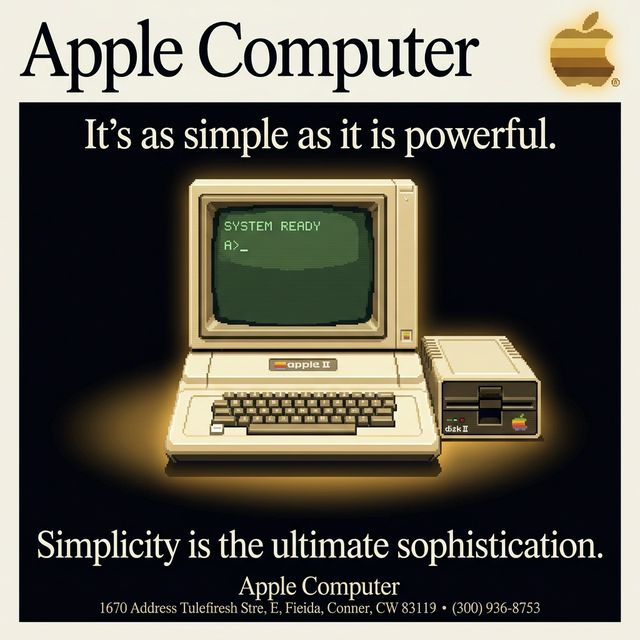
seventies · The Apple II, launched June 5, 1977, became the first highly successful mass-produced personal computer. The Apple IIe (1983) and IIc (1984) kept it in production through 1993 — 16 years. VisiCalc, the first killer app, launched on the Apple II in 1979 and drove $100 million in Apple II sales. The Apple II was the dominant computer in American schools through the 1980s — an entire generation's first programming experience was Logo, BASIC, and Oregon Trail on a green-screen Apple IIe.

Apple IIc pixel portrait
Apple IIc / //c
Apple IIc
Apple IIc / //c
fame

The First Computer with a Carry Handle

eighties · The Apple IIc (1984) was the first mass-market personal computer designed with portability as a first-class requirement — not as an afterthought. It had a built-in floppy drive, a carry handle recessed into the case (predating the MacBook's integrated handle by 20 years), and weighed 7.5 pounds. It was fully Apple IIe software-compatible in a form factor that could fit in a briefcase. The IIc was not the cheapest or the most powerful Apple II — it was the most thoughtfully integrated.
Atari 400 pixel portrait
Atari 400
Atari 400
Atari 400
fame

The Membrane Keyboard That Launched a Generation of Programmers

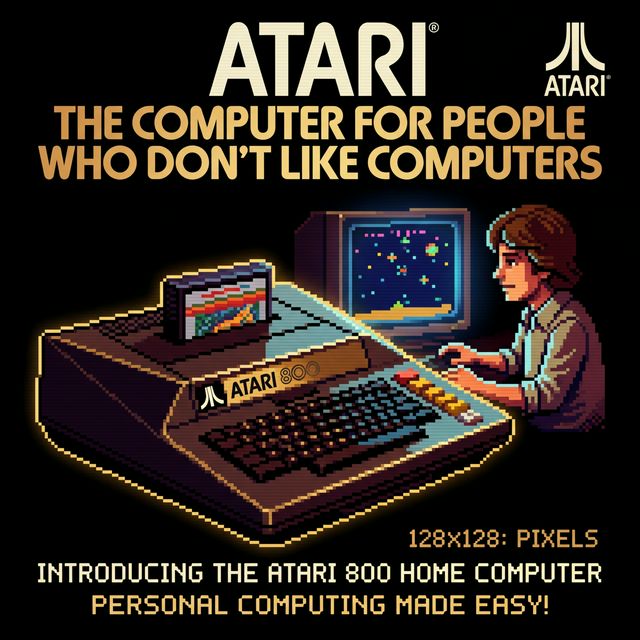
seventies · The Atari 400 (1979) was the entry-level sibling to the Atari 800, sharing its processor coprocessor architecture (ANTIC, GTIA, POKEY) but cut down to a flat membrane keyboard and 8KB RAM to hit a $399 price point. Its membrane keyboard was widely criticized but technically served a purpose: it was sealed against spills and static discharge, making it suitable for children and classroom environments where mechanical keyboards failed. The Atari 400 was the machine that introduced millions of children to BASIC programming and Atari's remarkable custom chip architecture — a machine that exceeded its price in capability by a wide margin.

Atari 400/800 pixel portrait
Atari 8-bit Family
Atari 400/800
Atari 8-bit Family
fame

The Graphics Machine That Gaming Built

seventies · The Atari 400 and 800 (1979) were the first home computers with dedicated graphics and sound coprocessors — the GTIA and POKEY chips respectively — giving them smooth scrolling, multiple independent graphics layers, and 4-channel digital audio at a time when Apple II graphics were a flat array of pixels and IBM hadn't entered the consumer market. The Atari 8-bit line was technically ahead for five years and commercially mismanaged for the same five years. Atari's Warner Communications acquisition contributed to both the machine's success and the company's eventual destruction.

Commodore 64 pixel portrait
C64
Commodore 64
C64
both

The Best-Selling Computer of All Time, Killed by Its Creator

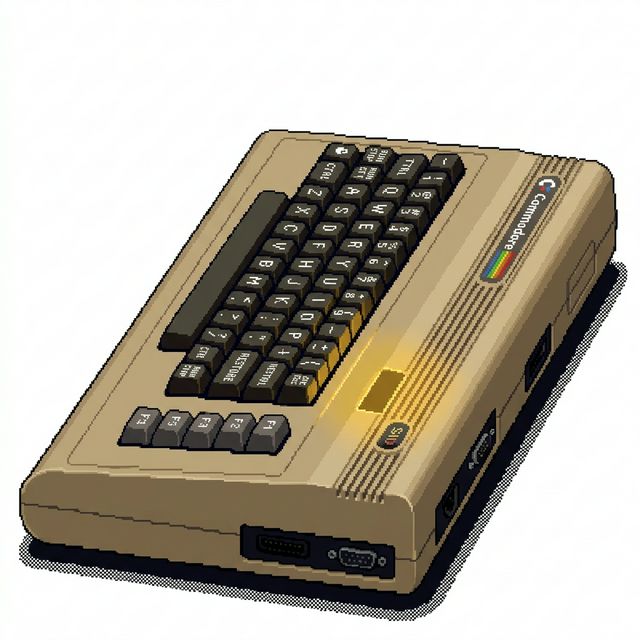
eighties · The Commodore 64 sold between 12 and 17 million units between 1982 and 1994 — making it the best-selling single personal computer model in history. It had a SID sound chip that was years ahead of its competition and a hardware sprite system that made it a dominant game platform. Commodore International then ran the company into bankruptcy through chronic mismanagement, killing the most successful home computer ever made.

Commodore Amiga pixel portrait
Amiga
Commodore Amiga
Amiga
both

The Computer That Was Five Years Ahead and Ten Years Late to Market

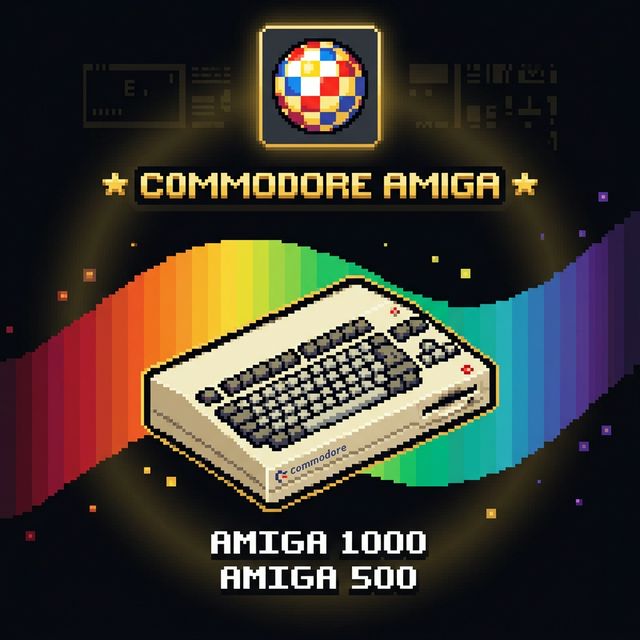
eighties · Released in 1985, the Amiga had preemptive multitasking, a hardware blitter for 2D graphics, a copper graphics coprocessor, a four-channel stereo sound chip, and a HAM display mode capable of 4,096 colors — in 1985. The Macintosh was displaying 1-bit black and white. The IBM PC was running DOS. The Amiga was doing video production, real-time audio, and graphical multitasking. Commodore did not know what they had.

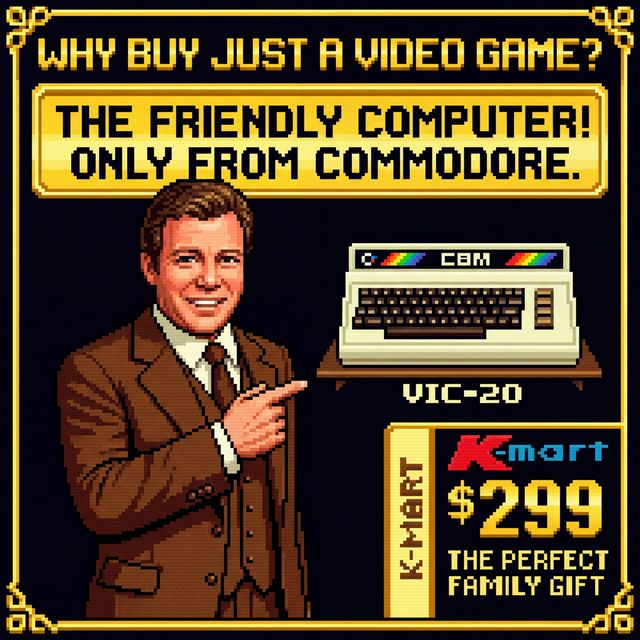
Commodore VIC-20 pixel portrait
VIC-20
Commodore VIC-20
VIC-20
fame

The First Computer to Sell a Million

eighties · The Commodore VIC-20, introduced 1981, was the first home computer to sell one million units. Priced below $300, it was the first computer available at K-Mart and other mass-market retailers. William Shatner advertised it on television: 'Why buy just a video game, when you can buy a Commodore VIC-20?' The VIC-20 brought computing into households that weren't looking for a computer.

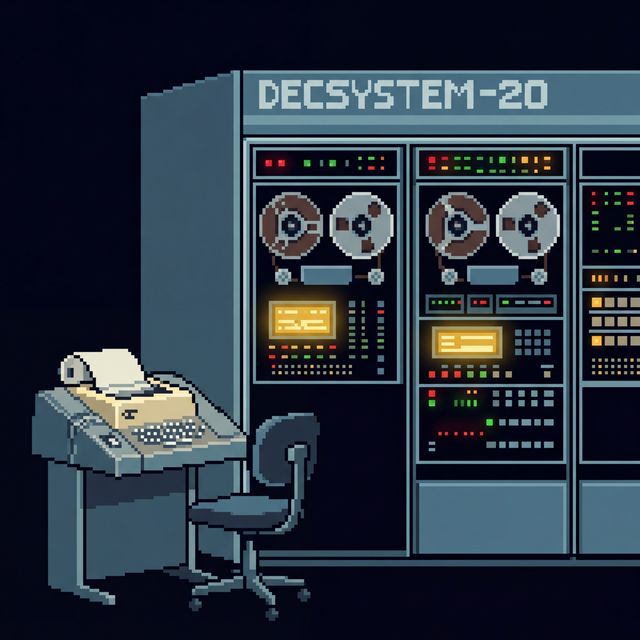
DEC PDP-10 pixel portrait
Digital Equipment Corporation PDP-10 / DECSYSTEM-20
DEC PDP-10
Digital Equipment Corporation PDP-10 / DECSYSTEM-20
fame

The Machine That Raised the Hackers

sixties · The DEC PDP-10 (and its successor, the DECSYSTEM-20) was the machine on which hacker culture was born. MIT's AI Lab ran a PDP-10. Stanford's AI Lab ran a PDP-10. Carnegie Mellon, Bolt Beranek and Newman, and dozens of universities ran PDP-10s. The machine had a 36-bit word size, a powerful instruction set, and timesharing operating systems that let multiple users share computing resources — directly shaping the culture, ethics, and aesthetics of the hacker community that built ARPANET, Unix, and the foundations of the modern internet.

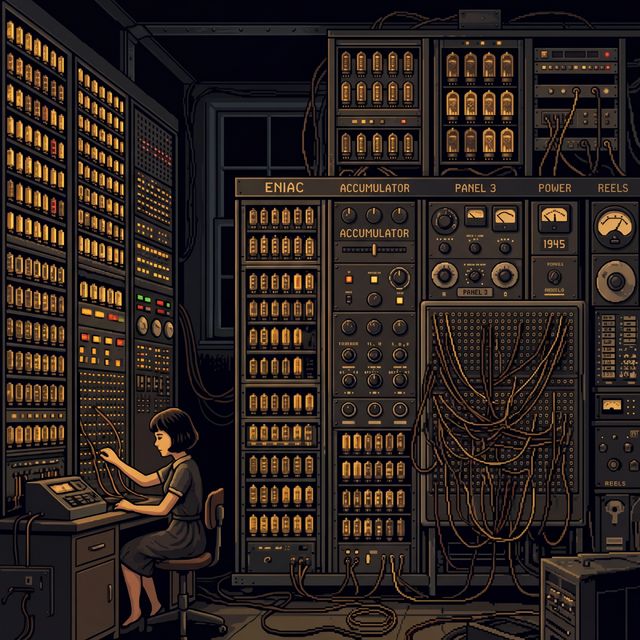
ENIAC pixel portrait
Electronic Numerical Integrator and Computer
ENIAC
Electronic Numerical Integrator and Computer
fame

The First Computer That Wasn't a Room Full of People

forties_fifties · The first general-purpose programmable electronic computer, completed in 1945 at the University of Pennsylvania. Weighed 30 tons. Filled an entire room. Consumed 150 kilowatts of power. And gave us the word 'bug' — because the first program failures were caused by actual moths shorting out its vacuum tube relays.

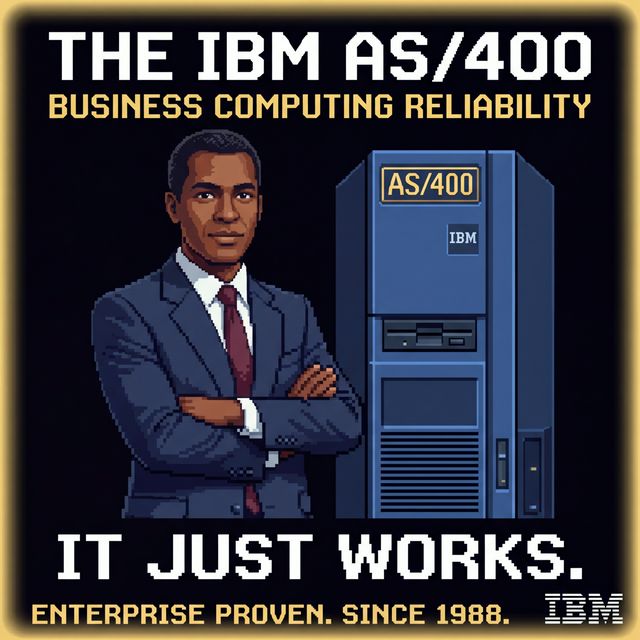
IBM AS/400 pixel portrait
IBM AS/400 / iSeries / IBM i
IBM AS/400
IBM AS/400 / iSeries / IBM i
fame

The Computer That Refuses to Die

eighties · Introduced in 1988, the IBM AS/400 (now IBM i, running on IBM Power Systems) is one of the longest-running computer platforms in history. Original AS/400 software — written in RPG, COBOL, or CL — runs unmodified on modern IBM i hardware today, 35 years later. Banks, manufacturers, retailers, and governments run mission-critical workloads on AS/400 descendants right now. The platform has survived every major architectural transition by maintaining backward compatibility as a first-order engineering commitment.

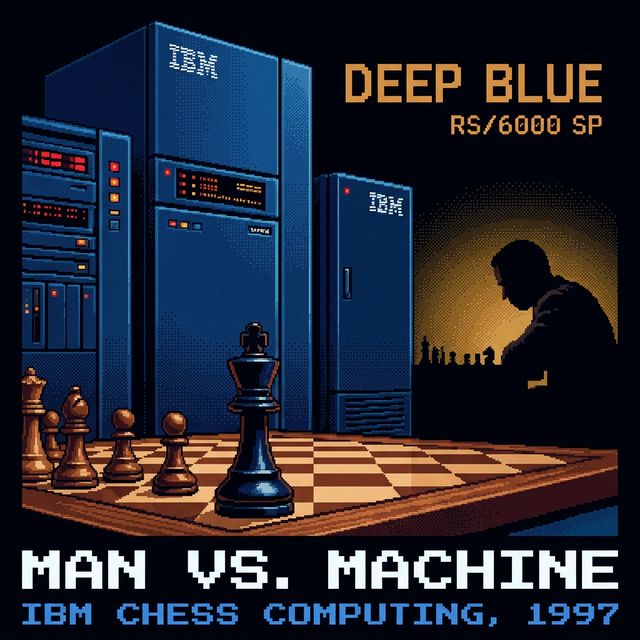
IBM Deep Blue pixel portrait
Deep Blue / Deeper Blue
IBM Deep Blue
Deep Blue / Deeper Blue
both

The Machine That Beat the World Champion Nobody Expected It To

nineties_late · Deep Blue was IBM's chess-playing supercomputer. In May 1997, it defeated Garry Kasparov — the reigning and undisputed world chess champion — in a six-game match, 3.5 to 2.5. It was the first computer to defeat a world chess champion in a standard match under standard time controls. The result reshaped the public understanding of artificial intelligence and was subsequently complicated by controversy about whether IBM had cheated.

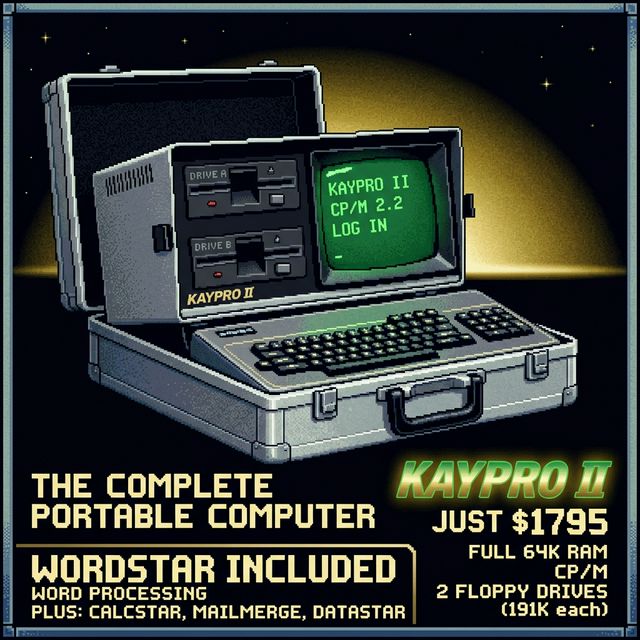
Kaypro pixel portrait
Kaypro Corporation
Kaypro
Kaypro Corporation
fame

The Luggable That Shipped With Everything

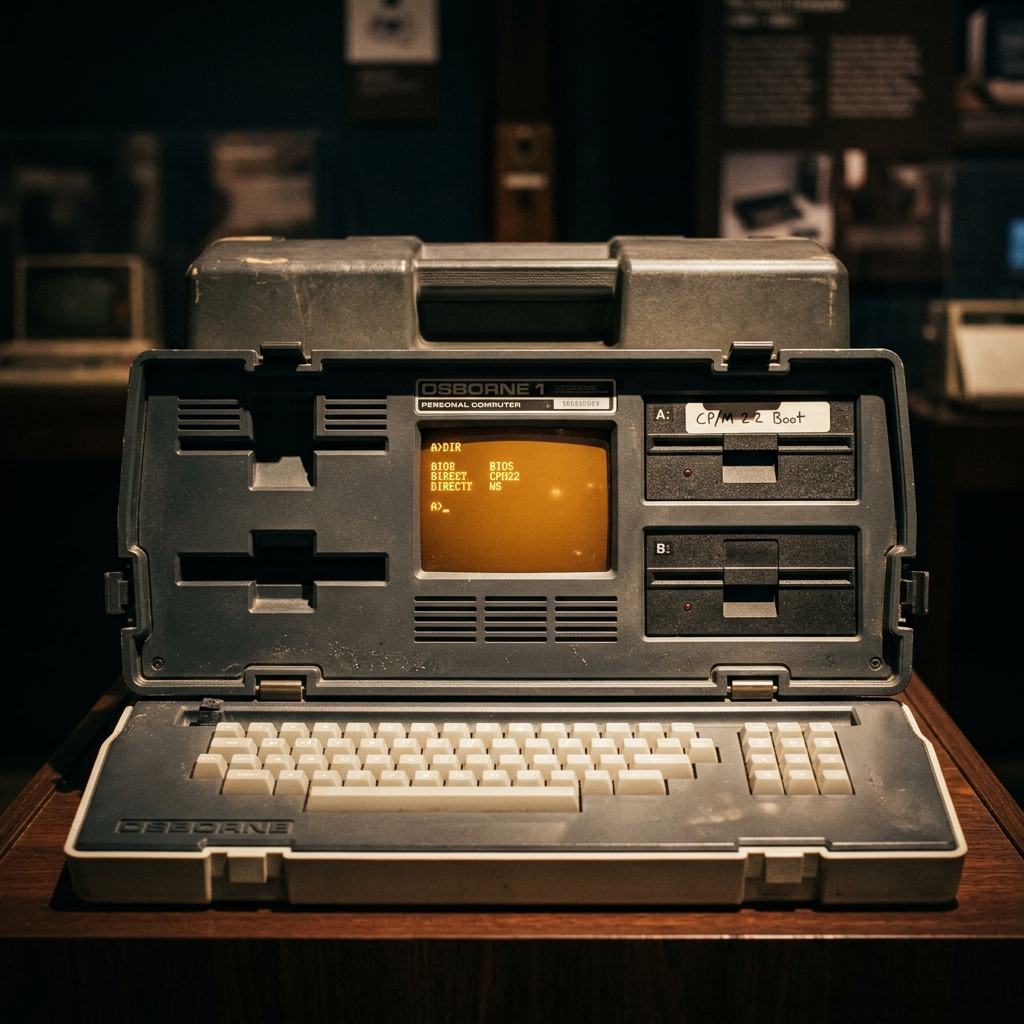
eighties · The Kaypro II (1982) was a CP/M-based portable computer bundled with five commercial software packages: WordStar (word processor), CalcStar (spreadsheet), DataStar (database), MailMerge (mail merge), and Microsoft Basic. At $1,795, it undercut competitors who sold software separately. The Kaypro was the first computer to win customers primarily through software bundling — the strategy that defined how PCs would be sold for the next 20 years.

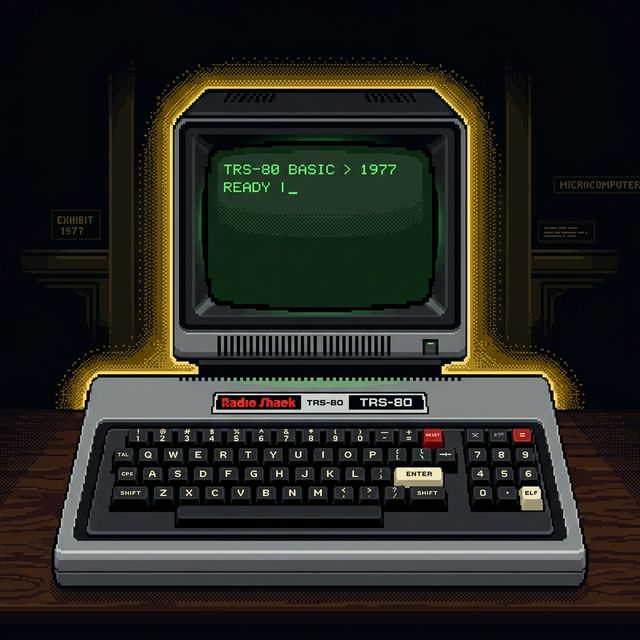
TRS-80 pixel portrait
Tandy Radio Shack TRS-80
TRS-80
Tandy Radio Shack TRS-80
fame

The Computer That Launched a Million Programmers

seventies · The TRS-80 Model I, released August 3, 1977, at $599 from Radio Shack stores across America. One of the first mass-market home computers, available off the shelf without mail order or kit assembly. The keyboard, monitor, and cassette storage came as an integrated unit — the first computer ordinary Americans could walk into a store and buy. Sold 200,000 units in its first year. Introduced hundreds of thousands of Americans to BASIC programming.

Ancient Computing Ancestors

The first data structures, before electricity

Base-10 — Ten Fingers, Ten Toes pixel portrait
c. 300,000 BCE
Base-10 — Ten Fingers, Ten Toes
c. 300,000 BCE
both

The Architectural Decision Made by Evolution

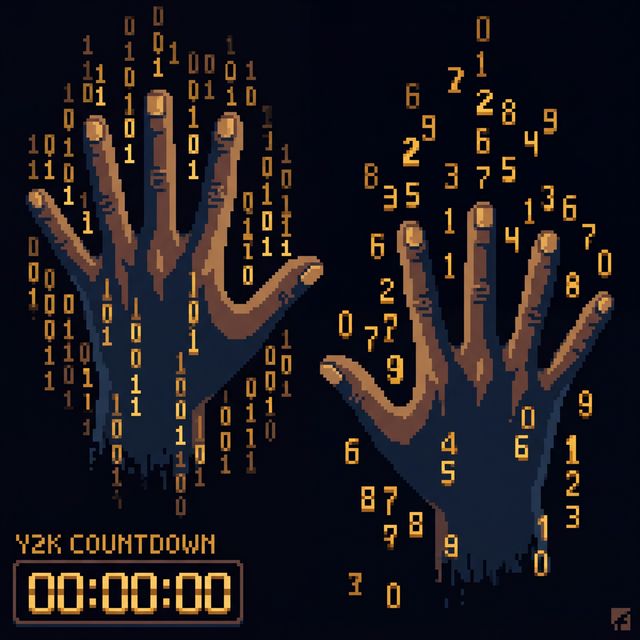
forties_fifties · The human body is the original computing interface. Humans have 10 fingers. This anatomical fact caused every civilization on Earth to independently invent a base-10 number system. Base-10 has awkward divisibility properties compared to base-12. Computers use base-2. The interface between human base-10 and computer base-2 is the source of the Y2K bug, the Year 2038 problem, floating-point precision errors, and every date-boundary failure in computing history.

Calculi — The Pebble Accountants pixel portrait
c. 3500 BCE
Calculi — The Pebble Accountants
c. 3500 BCE
fame

The Clay Tokens That Gave Us the Word 'Calculate'

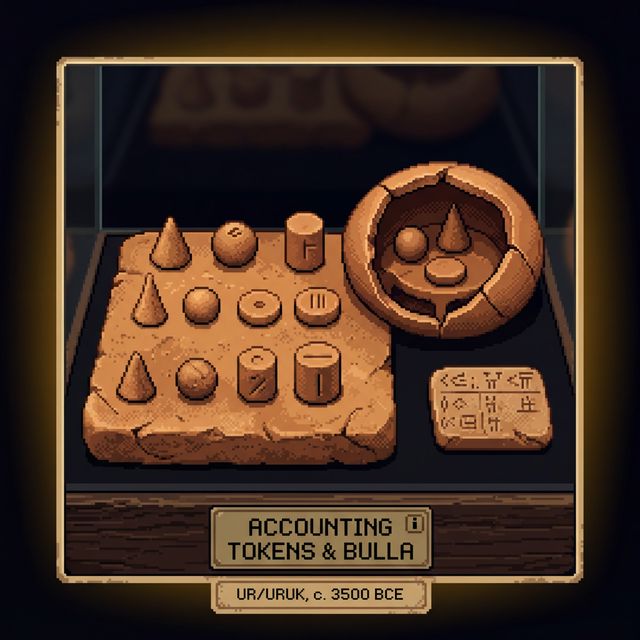
forties_fifties · Clay tokens used in ancient Mesopotamia (Sumer, Akkad, and Babylon) from approximately 8000 BCE as the earliest known accounting system. The Latin word calculus means 'pebble.' The word 'calculate' derives directly from these physical tokens. In their later form, they were sealed inside hollow clay spheres — the world's first tamper-evident transaction envelope. To verify the contents without breaking the sphere, scribes impressed token shapes on the outside. This led directly to cuneiform tablets — writing was invented as a shortcut around checking the contents of accounting envelopes.

The Abacus pixel portrait
c. 2700 BCE
The Abacus
c. 2700 BCE
fame

The First Computer That Beat the Electronic One

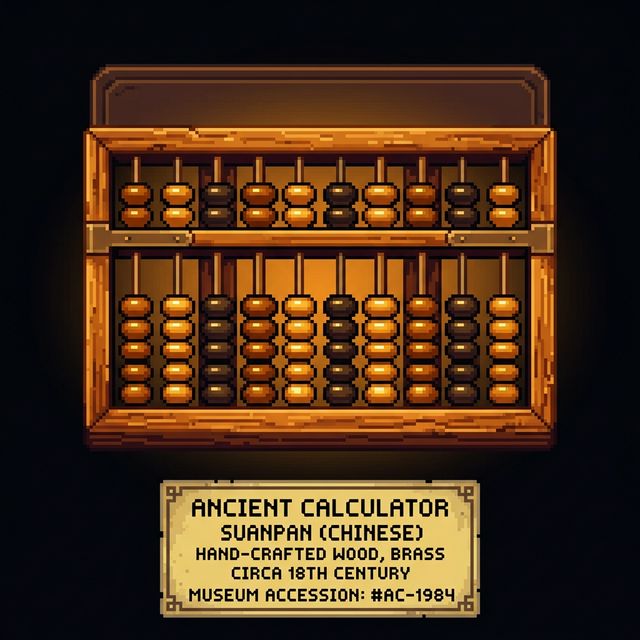
forties_fifties · The oldest and most enduring computation device in human history. Used across Mesopotamia, China, Greece, Rome, and Japan for over 4,000 years. In 1946, a US Army numeric processing expert using a mechanical calculator raced a Japanese postal worker using a soroban (Japanese abacus). The abacus won, four out of five rounds.

The BBS pixel portrait
Bulletin Board System, 1978–1996
The BBS
Bulletin Board System, 1978–1996
both

The Internet We Had Before the Internet

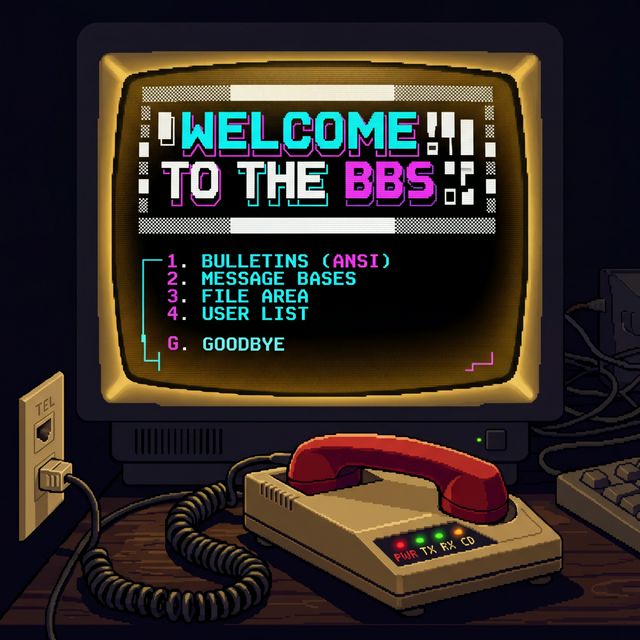
eighties · Bulletin Board Systems were the pre-web internet: dial-up text-based social networks, file archives, message forums, and online communities running on personal computers connected to phone lines. Ward Christensen's CBBS (1978) was the first. At peak, there were over 60,000 BBSes in the United States. They created the culture of online community, open-source file sharing, hacking, piracy, and the social norms — and anti-norms — that the modern internet inherited directly.

The Quipu pixel portrait
c. 3000 BCE
The Quipu
c. 3000 BCE
fame

The Knotted String Database Nobody Could Fully Decode

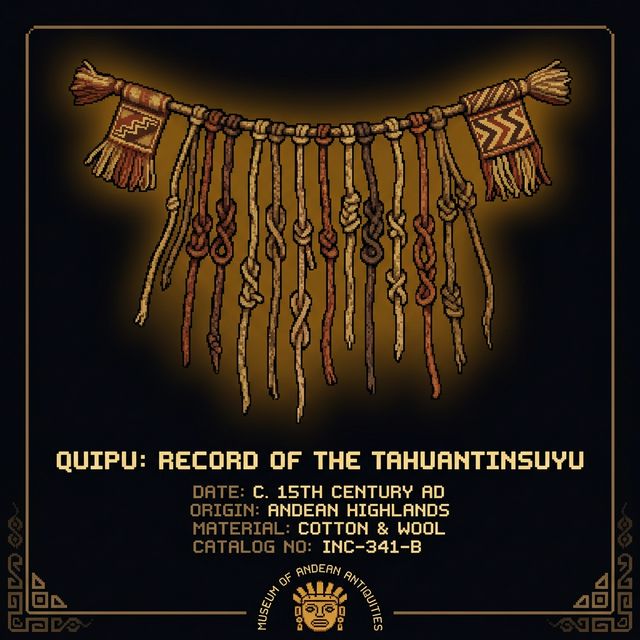
forties_fifties · The Incan quipu (khipu) — a system of knotted strings used to encode numerical records, census data, tax accounting, and possibly narrative information — is the most sophisticated pre-electronic data structure in the Americas. Somewhere between 600 and 1,500 quipus survive. Scholars can partially decode the numerical encoding. The full schema of the system — including what the non-numerical quipus encoded — has never been recovered.

The Tally Stick pixel portrait
c. 30,000 BCE
The Tally Stick
c. 30,000 BCE
both

The Database That Burned Down Parliament

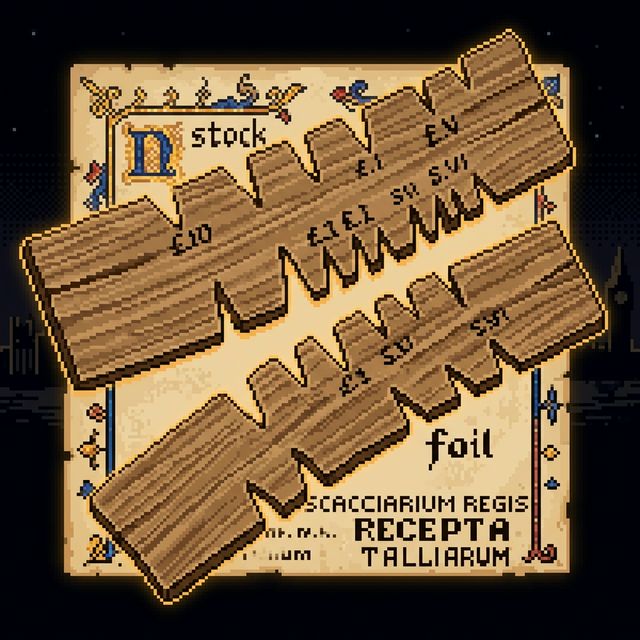
forties_fifties · Split wooden sticks used as tamper-evident financial records for over 30,000 years. The British Exchequer used tally sticks as official financial instruments from the 12th century. When Parliament voted to retire them in 1826, the accumulated sticks were stored until 1834. A subordinate decided to dispose of them by burning them in the furnace beneath the House of Lords. The fire spread to the flue. The Palace of Westminster burned to the ground.

AI Labs

The organizations building the current era — and its failure modes

Anthropic pixel portrait
@anthropic
Anthropic
@anthropic
both

The Safety Lab That Also Ships

2020s · Founded by former OpenAI researchers who left over safety concerns. Created Constitutional AI and the Claude model family. Also in the Incident Room for the Accept-Data-Loss flag incident — demonstrating that safety-focused labs are not immune to the agentic execution failure class.

Google DeepMind pixel portrait
@googledeepmind
Google DeepMind
@googledeepmind
both

The Lab That Solved the Protein Problem

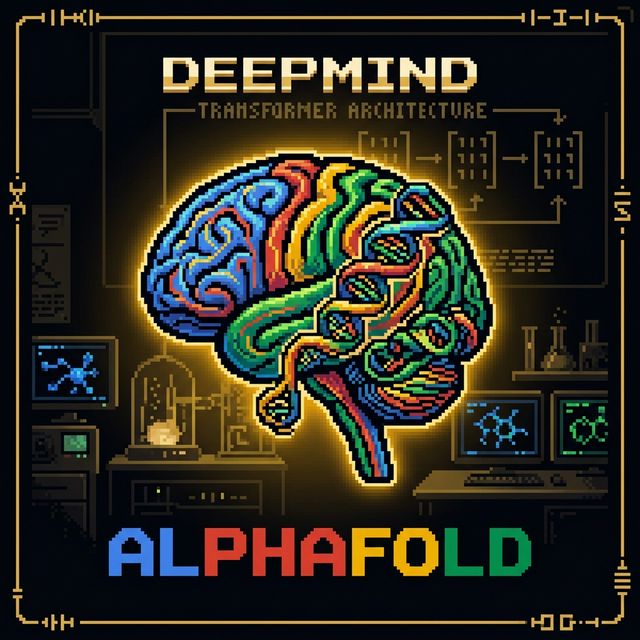
2020s · Creator of AlphaFold (solved protein folding — a 50-year unsolved biology problem), AlphaGo (first to beat a world Go champion), Gemini (Google's frontier LLM), and the team that published the original Transformer paper (Attention Is All You Need, 2017). Also in the museum for the Gemini image generation pause of 2024 and the ongoing Gemini reliability incidents.

Hugging Face pixel portrait
@huggingface
Hugging Face
@huggingface
fame

The GitHub of Machine Learning

2020s · The open-source platform that democratized access to large language models, datasets, and ML tooling. The Transformers library, the Model Hub, and Spaces made frontier AI research accessible to developers without resource-scale compute. Also experienced a Spaces platform security breach in 2024 that exposed the risks of hosting untrusted model code at scale.

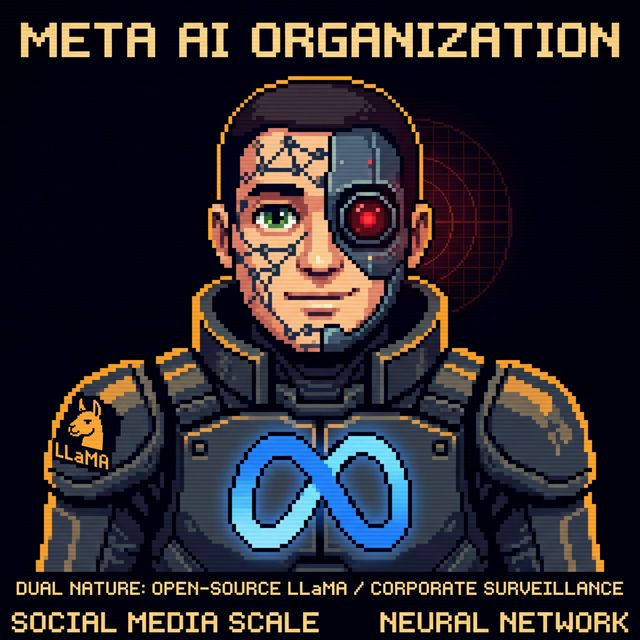
Meta AI pixel portrait
@meta_ai
Meta AI
@meta_ai
both

The Open-Source Contradiction

2020s · Creator of LLaMA — the open-weight model family that democratized large language model research and enabled the entire local AI ecosystem. Also responsible for Galactica, the scientific knowledge model shut down in three days for generating confident scientific nonsense, and the team behind the PyTorch framework that underpins most of modern deep learning.

Mistral AI pixel portrait
@mistralai
Mistral AI
@mistralai
fame

The European Contrarian

2020s · Founded by former Google DeepMind and Meta AI researchers in Paris. Released open-weight models (Mistral 7B, Mixtral) that outperformed much larger closed models, demonstrating that efficiency and architecture matter more than raw scale. Built the case that frontier AI capability does not require US-scale compute budgets.

OpenAI pixel portrait
@openai
OpenAI
@openai
both

The Company That Shipped the Paradigm Shift

2020s · Creator of GPT-3, GPT-4, DALL·E, and ChatGPT — the product that brought large language models to 100 million users in 60 days and permanently altered the technology industry's timeline. Also documented in the Incident Room for deploying systems whose failure modes were not yet understood at the moment of maximum distribution.

Pioneers

Laid foundations before the field existed

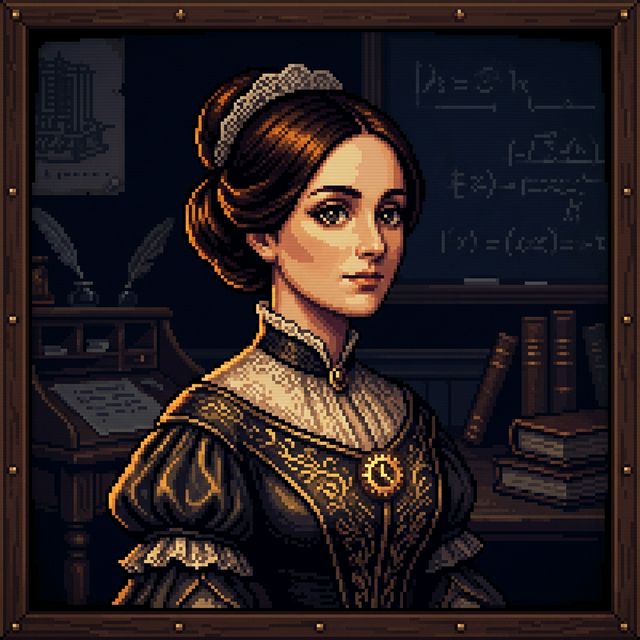
Ada Lovelace pixel portrait
@lovelace
Ada Lovelace
@lovelace
fame

First Programmer

1840s · Wrote the first algorithm intended for machine execution. Recognized that computing machines could go beyond pure calculation.

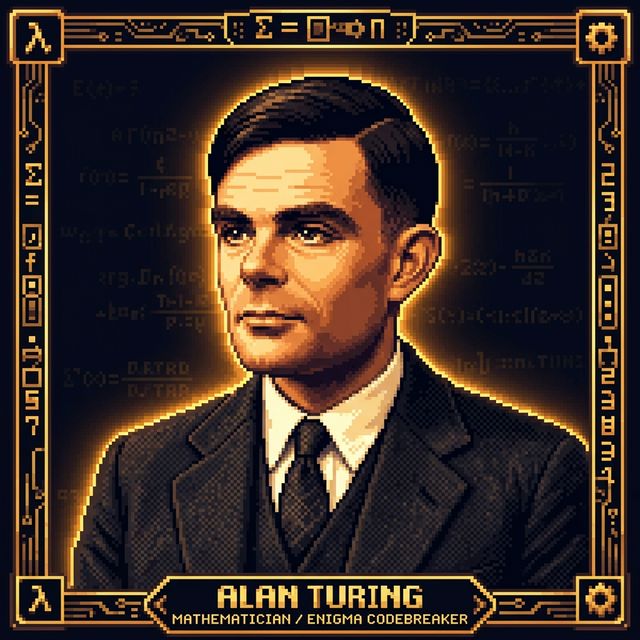
Alan Turing pixel portrait
@turing
Alan Turing
@turing
fame

Father of Theoretical Computer Science

1930s–1950s · Formalized computation itself. Broke Enigma. Built early computers. Laid foundations for AI. Persecuted for who he was.

AOL pixel portrait
@aol
AOL
@aol
both

The Internet's Training Wheels

1985–2015 · Brought the internet to mainstream America through dial-up access, AOL Instant Messenger, and ubiquitous CD-ROM mailers. Built the most successful walled garden in internet history, then watched its users graduate to the open web. The Time Warner merger destroyed $200 billion in value.

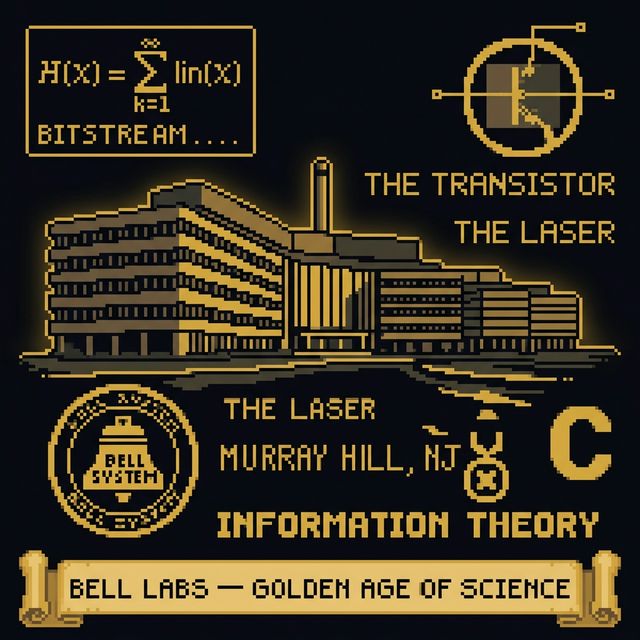
Bell Labs pixel portrait
@belllabs
Bell Labs
@belllabs
fame

The Factory Where Software Was Invented

1960s · Created Unix, C, C++, Plan 9, the transistor, information theory, and the laser. More foundational computing innovations emerged from one building in Murray Hill, New Jersey than from any other single institution in history.

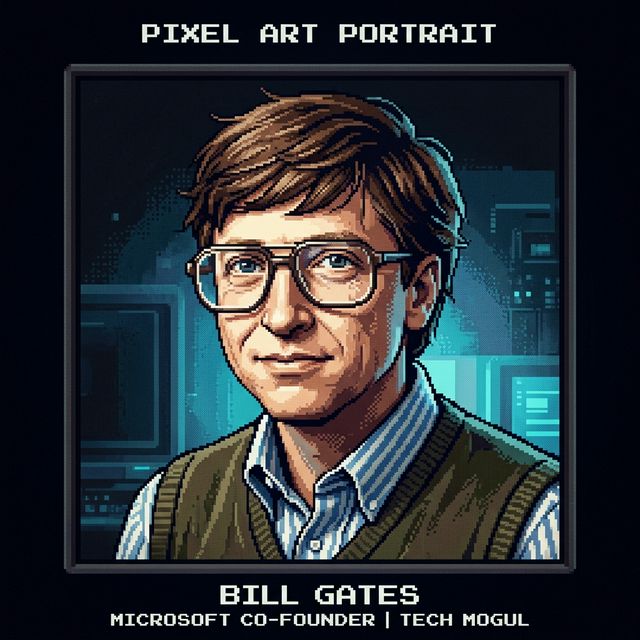
Bill Gates pixel portrait
@gates
Bill Gates
@gates
both

Co-founder of Microsoft

1970s–present · Co-founded Microsoft with Paul Allen, wrote Altair BASIC, built Windows into the dominant desktop operating system, led the IE browser wars, authored the 'Trustworthy Computing' memo, now focuses on philanthropy through the Gates Foundation.

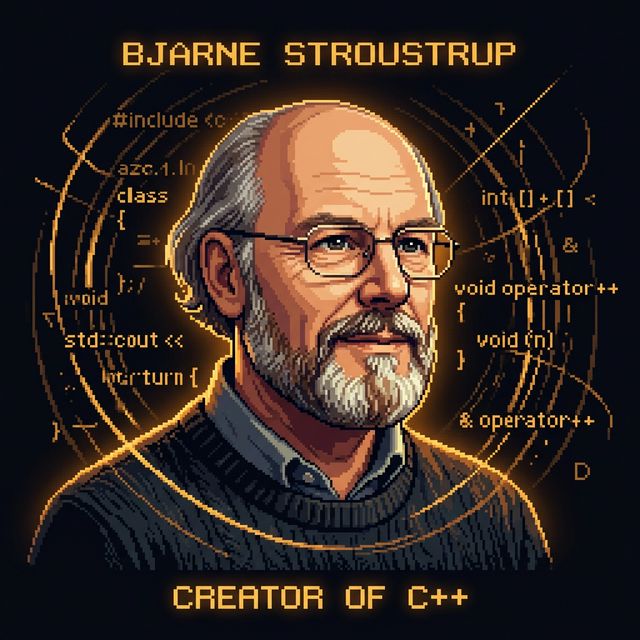
Bjarne Stroustrup pixel portrait
@stroustrup
Bjarne Stroustrup
@stroustrup
fame

Creator of C++

1980s · Created C++ — added object-oriented programming to C while preserving its low-level power. Championed zero-overhead abstraction as a design principle.

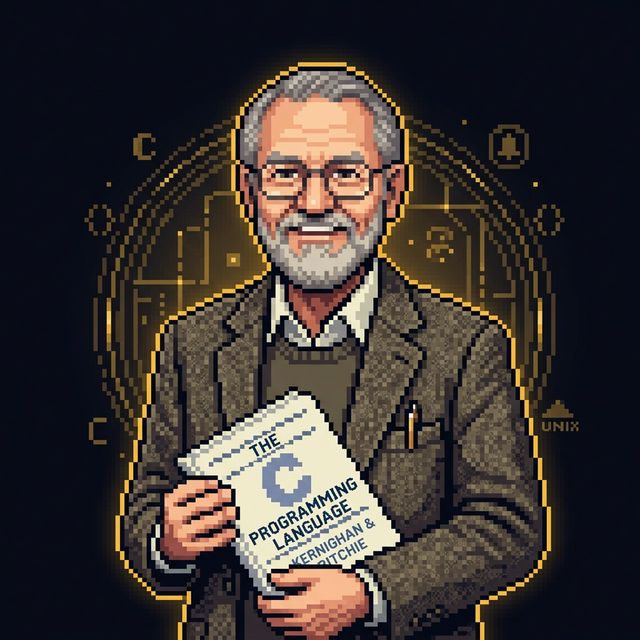
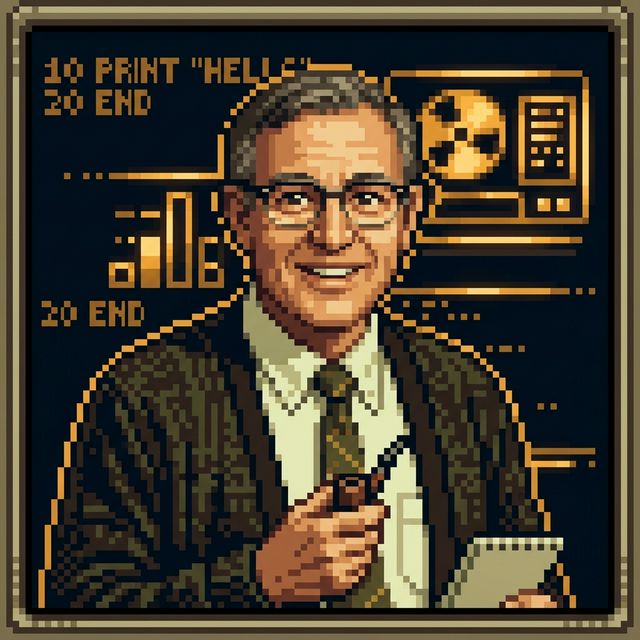
Brian Kernighan pixel portrait
@bwk
Brian Kernighan
@bwk
fame

The K in K&R and AWK

1970s–present · Co-authored 'The C Programming Language' (K&R) with Dennis Ritchie, co-created AWK, contributed to Unix at Bell Labs, wrote the first documented 'Hello, World!' program, and has spent decades as a professor at Princeton and prolific author of technical books.

Charles Babbage pixel portrait
@babbage
Charles Babbage
@babbage
fame

Father of the Computer

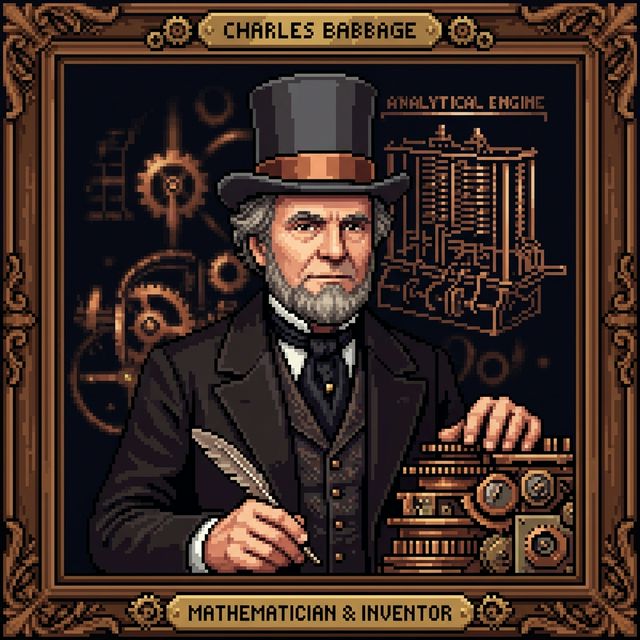
1830s · Designed the Difference Engine and Analytical Engine — mechanical general-purpose computers a century before electronics

Clarence 'Skip' Ellis pixel portrait
@skipellis
Clarence 'Skip' Ellis
@skipellis
fame

Pioneer of Collaborative Computing

1960s–2010s · First African American to earn a PhD in computer science (University of Illinois, 1969). Pioneered groupware and real-time collaborative editing at Xerox PARC and MCC. His Operational Transformation algorithms are the mathematical foundation beneath Google Docs, Figma, and every real-time collaborative editor in use today.

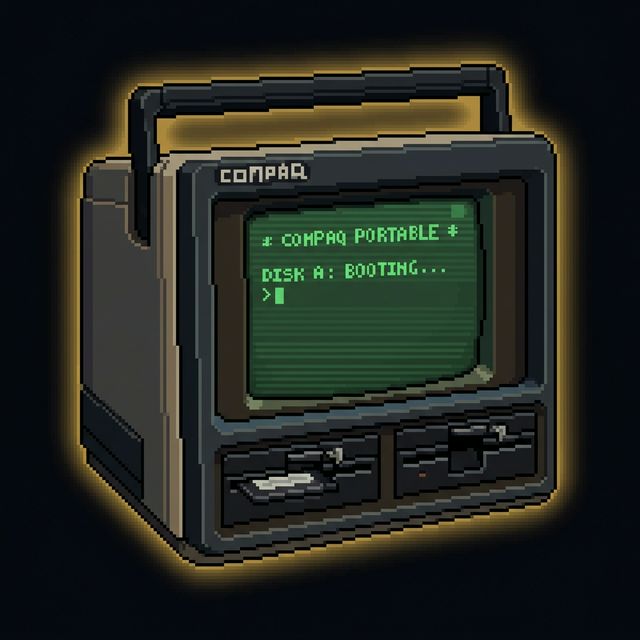
Compaq pixel portrait
Compaq Computer Corporation
Compaq
Compaq Computer Corporation
fame

The Clone That Broke IBM's Lock

eighties · Compaq Computer Corporation, founded 1982, produced the first fully IBM-PC-compatible portable computer — designed on a napkin in a House of Pies restaurant in Houston, reverse-engineered to be IBM-compatible without using IBM code, and assembled in a warehouse. The Compaq Portable proved that IBM's PC architecture could be legally cloned. This single act of reverse engineering created the entire x86 PC ecosystem, commoditized personal computing, and made IBM's hardware dominance impossible.

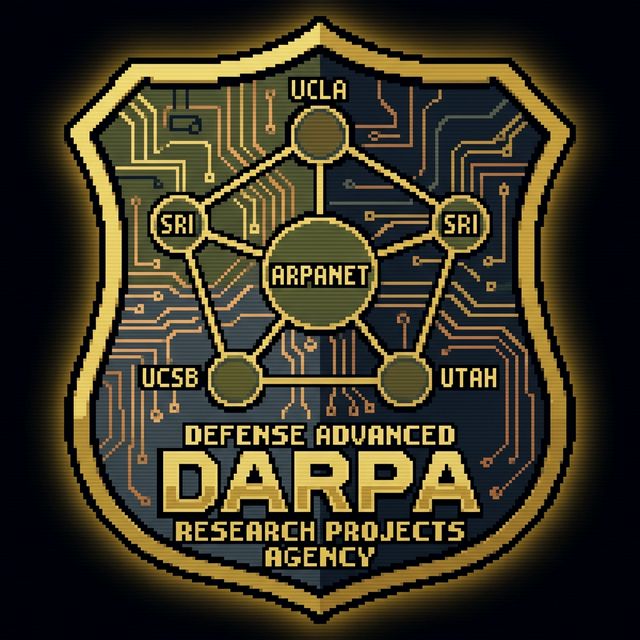
DARPA pixel portrait
@darpa
DARPA
@darpa
fame

The Agency That Funded the Future

1960s · Funded ARPANET (predecessor of the internet), TCP/IP, timesharing research, AI research, and virtually every foundational computing technology developed between 1958 and 1990. The agency's model — fund brilliant people with minimal oversight and long time horizons — produced more foundational technology than any corporate R&D lab.

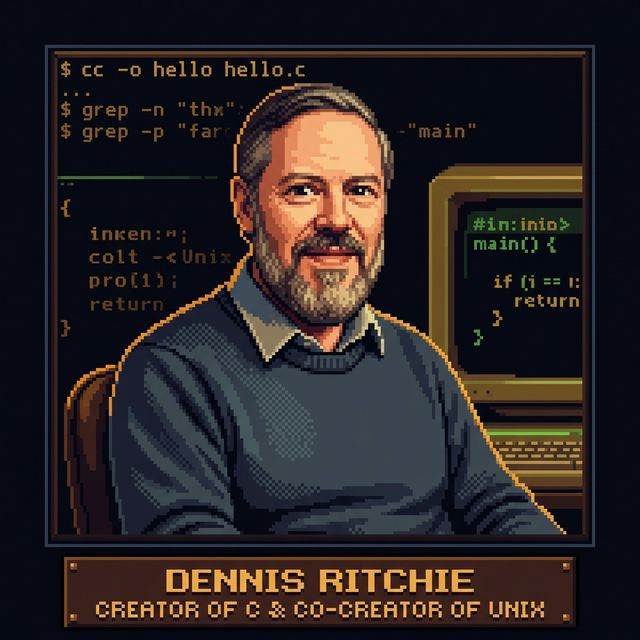
Dennis Ritchie pixel portrait
@dmr
Dennis Ritchie
@dmr
fame

Creator of C and Co-creator of Unix

1970s · Created the C programming language and co-created Unix with Ken Thompson — two foundations that most modern software still rests on.

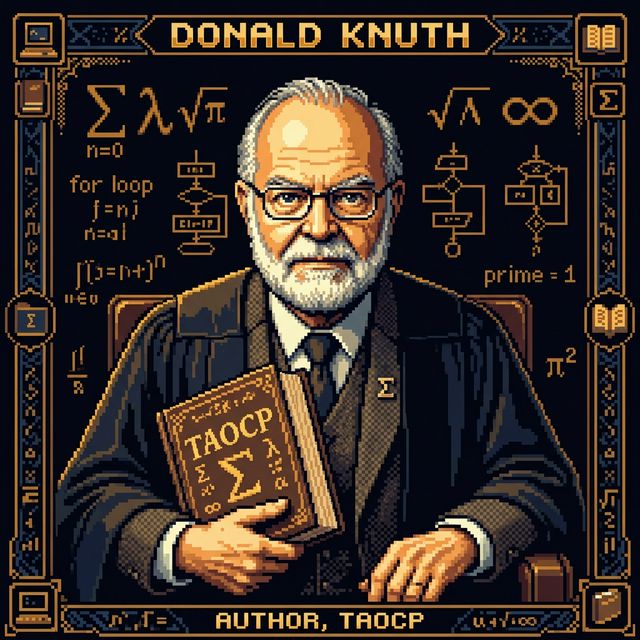
Donald Knuth pixel portrait
@knuth
Donald Knuth
@knuth
fame

The Art of Programming Itself

1960s–present · Author of The Art of Computer Programming (TAOCP — multi-volume magnum opus, in progress since 1962), creator of the TeX typesetting system, inventor of literate programming, foundational contributor to the analysis of algorithms, and issuer of the famous $2.56 bug bounty checks.

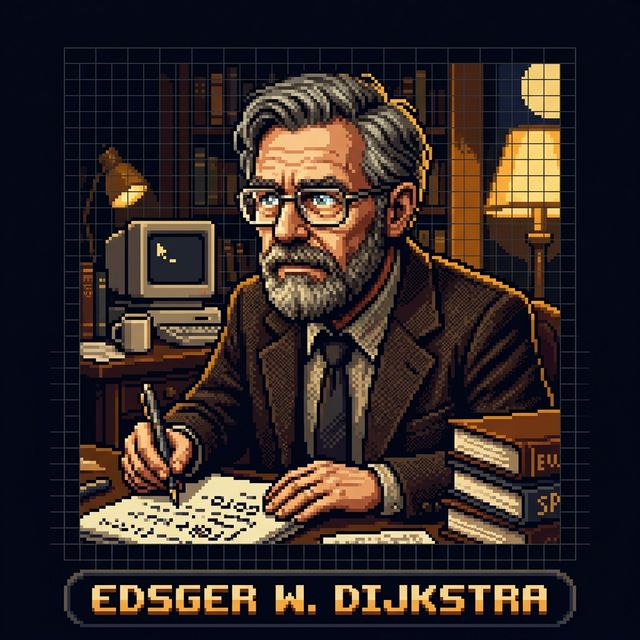
Edsger Dijkstra pixel portrait
@dijkstra
Edsger Dijkstra
@dijkstra
fame

The Structured Programming Prophet

1960s–2000s · Wrote 'Go To Statement Considered Harmful' (1968), invented Dijkstra's shortest-path algorithm, introduced semaphores for concurrent programming, built the THE multiprogramming system, championed structured programming, and authored 1,318 handwritten EWD manuscripts over four decades.

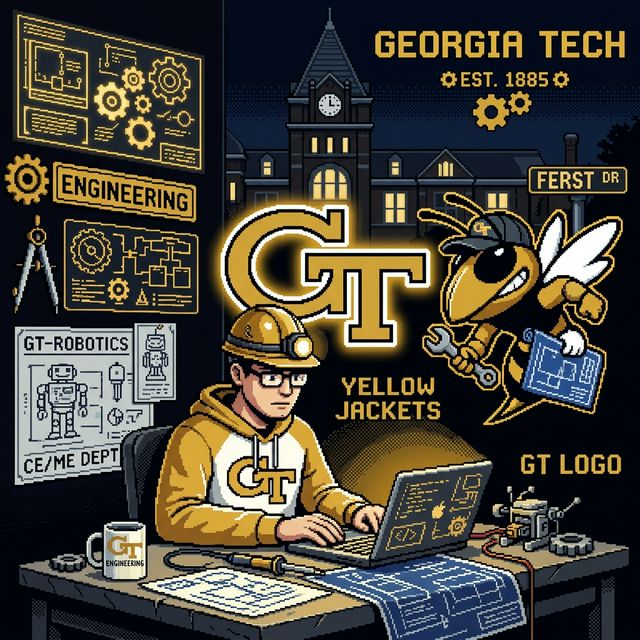
Georgia Tech pixel portrait
@georgiatech
Georgia Tech
@georgiatech
fame

The Security Research Powerhouse

2000s · One of the top cybersecurity research universities in the world. Home to the Information Security Center (GTISC), which produces cutting-edge research on malware analysis, network security, and systems security. Georgia Tech's online MSCS program democratized graduate-level computer science education, and its capture-the-flag teams consistently rank among the world's best.

Gladys West pixel portrait
@gladyswest
Gladys West
@gladyswest
fame

The Woman Who Shaped the Earth for GPS

1960s–2000s · Spent 42 years at the U.S. Naval Surface Warfare Center developing the mathematical model of Earth's shape — the geoid — that is the geodetic foundation of the Global Positioning System. Every GPS-enabled device in the world depends on Gladys West's equations. She did this math mostly by hand before computers could do it for her, and was largely unknown until her 80s.

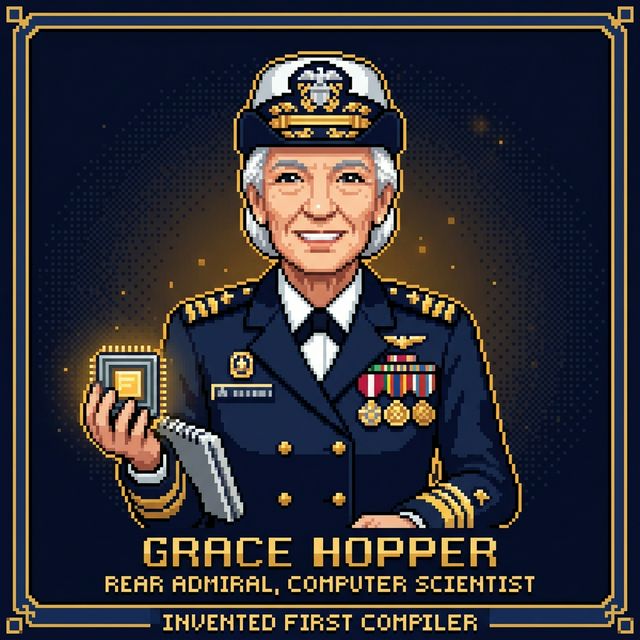
Grace Hopper pixel portrait
@hopper
Grace Hopper
@hopper
fame

Mother of COBOL / Debugging Pioneer

1940s–1980s · Built the first compiler, created COBOL, found the first literal computer bug, and popularized the idea that programming languages should resemble English.

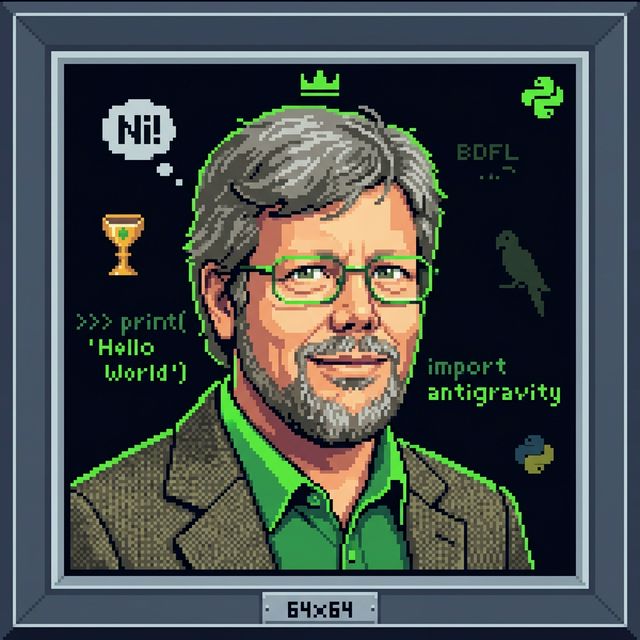
Guido van Rossum pixel portrait
@guido
Guido van Rossum
@guido
fame

Creator of Python / Benevolent Dictator For Life

1990s · Created Python and championed readability as a first-class language design principle. Proved that optimizing for the human reader produces better software.

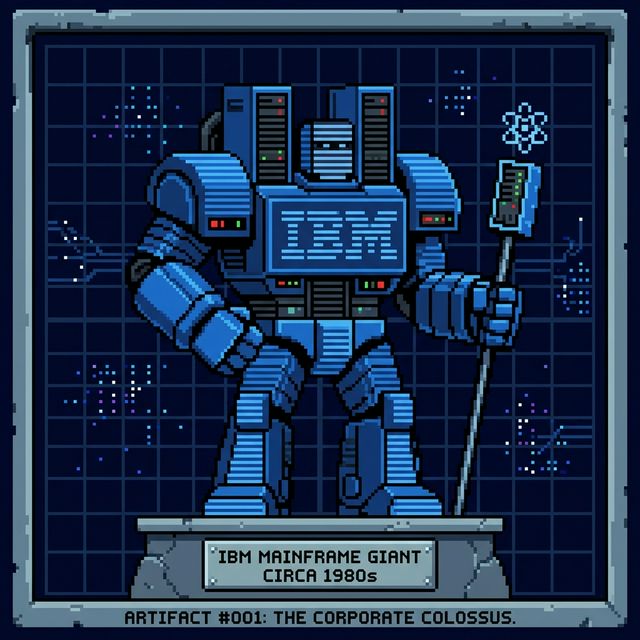
IBM pixel portrait
@ibm
IBM
@ibm
both

The Company That Built Computing

1910s–present · Mainframes, System/360, the IBM PC, punch cards, COBOL standardization, Watson, and the consulting empire that followed — IBM defined what 'enterprise computing' meant for half a century.

Jerry Lawson pixel portrait
@jerrylawson
Jerry Lawson
@jerrylawson
fame

Father of the Game Cartridge

1970s–1980s · Led the team that built the Fairchild Channel F in 1976 — the first home console to use interchangeable ROM cartridges — transforming video games from fixed hardware into a software-distribution medium. One of the very few Black engineers in Silicon Valley during the 1970s, and a member of the legendary Homebrew Computer Club.

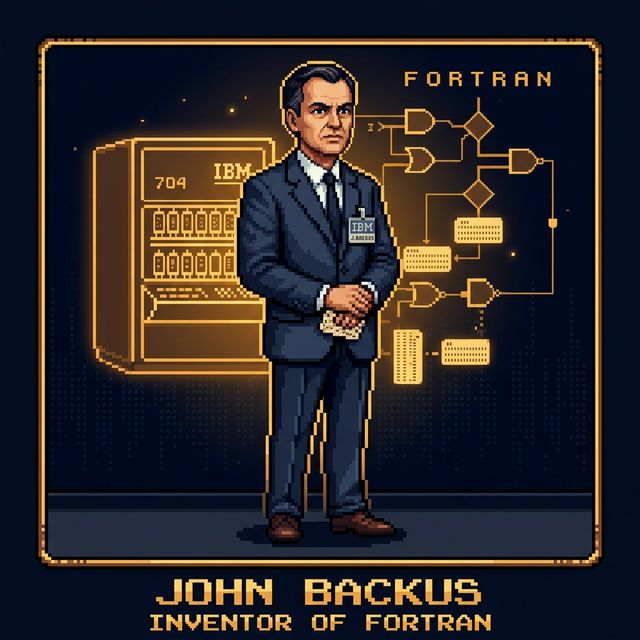
John Backus pixel portrait
@backus
John Backus
@backus
fame

Creator of FORTRAN and BNF Notation

1950s · Led the team that created FORTRAN — the first high-level programming language. Invented Backus-Naur Form (BNF), the formal notation for describing programming language grammars.

John McAfee pixel portrait
@mcafee
John McAfee
@mcafee
both

Antivirus Pioneer Turned Cautionary Tale

1980s–2020s · Founded McAfee Associates and created one of the first commercial antivirus programs. Later became infamous for erratic behavior, fleeing Belize during a murder investigation, cryptocurrency schemes, and tax evasion. Died in a Spanish prison in 2021.

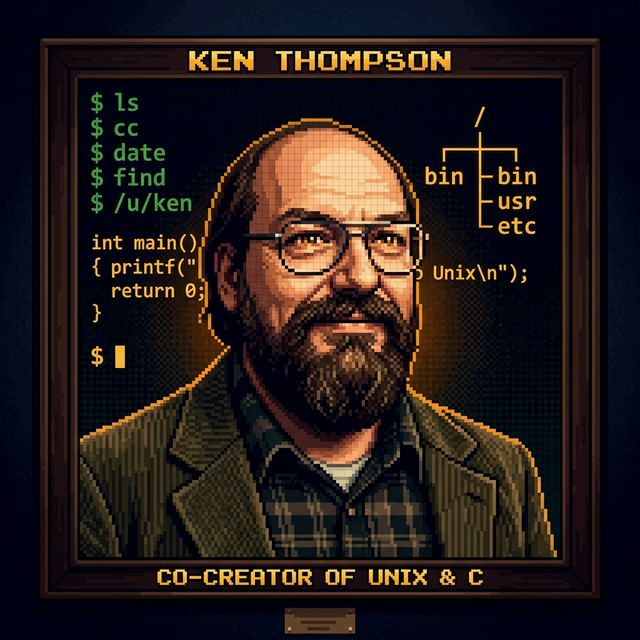
Ken Thompson pixel portrait
@ken
Ken Thompson
@ken
fame

Co-creator of Unix and Go

1970s · Co-created Unix with Dennis Ritchie, created the B language (predecessor to C), co-created Go, built the first regex implementation, created the first computer chess program, and demonstrated the 'Trusting Trust' attack.

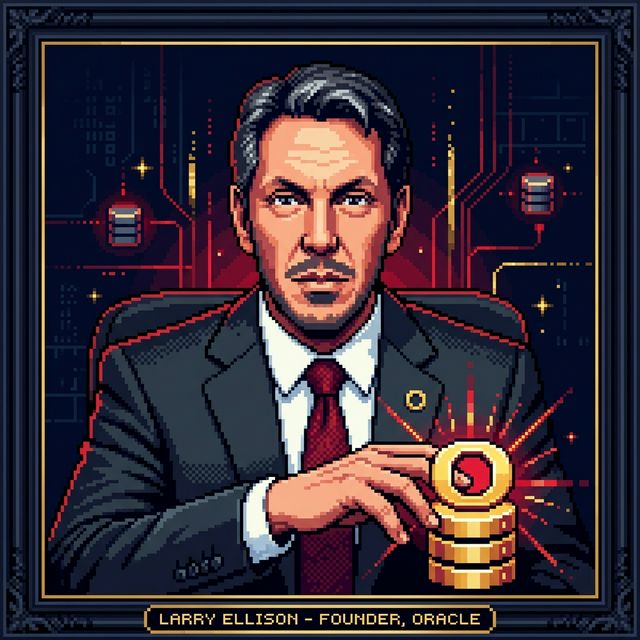
Larry Ellison pixel portrait
@ellison
Larry Ellison
@ellison
both

Co-founder of Oracle

1970s–present · Co-founded Oracle Corporation and built the dominant relational database management system. Pioneered commercial SQL databases, pursued aggressive acquisition strategies, and ran the 'Unbreakable' marketing campaign that became a security punchline.

Larry Wall pixel portrait
@larry
Larry Wall
@larry
fame

Creator of Perl

1980s–1990s · Created Perl — the 'duct tape of the internet' — and the philosophy that there's more than one way to do it. Perl CGI scripts powered the early interactive web.

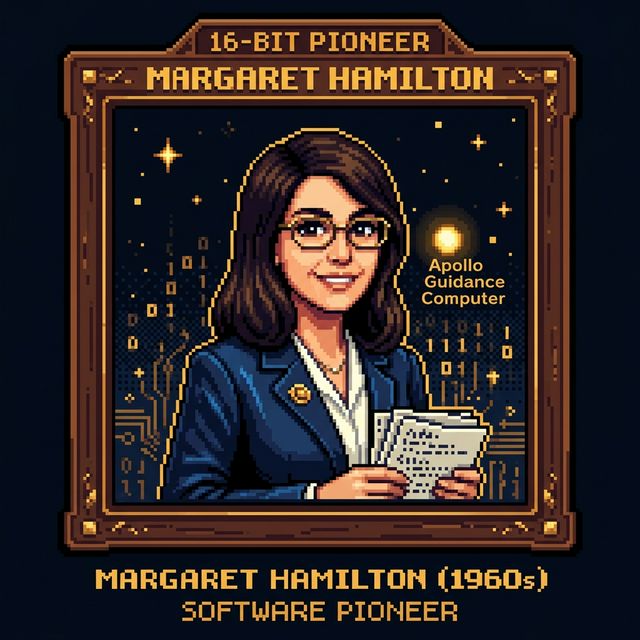
Margaret Hamilton pixel portrait
@hamilton
Margaret Hamilton
@hamilton
fame

Software Engineering Pioneer

1960s · Coined the term 'software engineering,' led the Apollo 11 flight software team, and built the error-handling architecture that saved the Moon landing.

Mark Dean pixel portrait
@markdean
Mark Dean
@markdean
fame

The Architect Under the IBM PC

1980s–2000s · Holds three of the nine original IBM PC patents, co-invented the ISA bus that let peripherals talk to computers, led the team that built the first 1GHz processor chip, and became the first African American IBM Fellow — all while largely unknown to the public who benefited from his work every day.

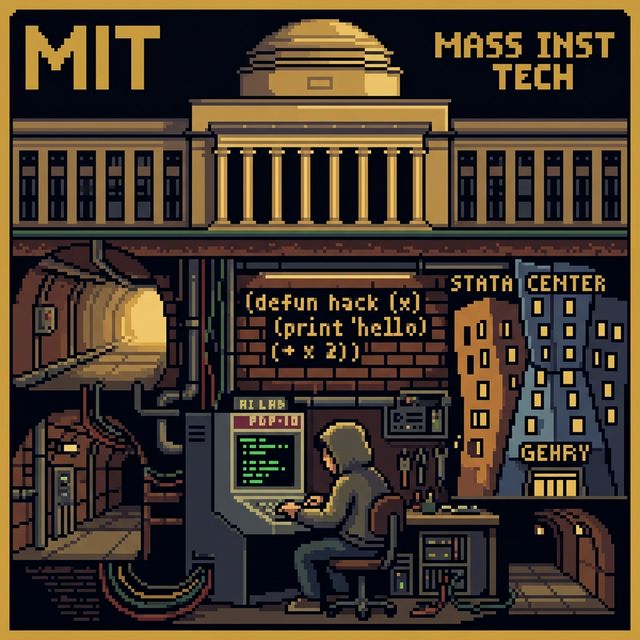
MIT pixel portrait
@mit
MIT
@mit
fame

Where Software Became a Discipline

1960s · Created CTSS (first timesharing system), Multics (first secure OS), the MIT License, Lisp, Scheme, RSA encryption, the AI Lab, Project MAC, and the hacker culture that shaped the industry. Margaret Hamilton's Apollo software team was based at MIT's Instrumentation Laboratory.

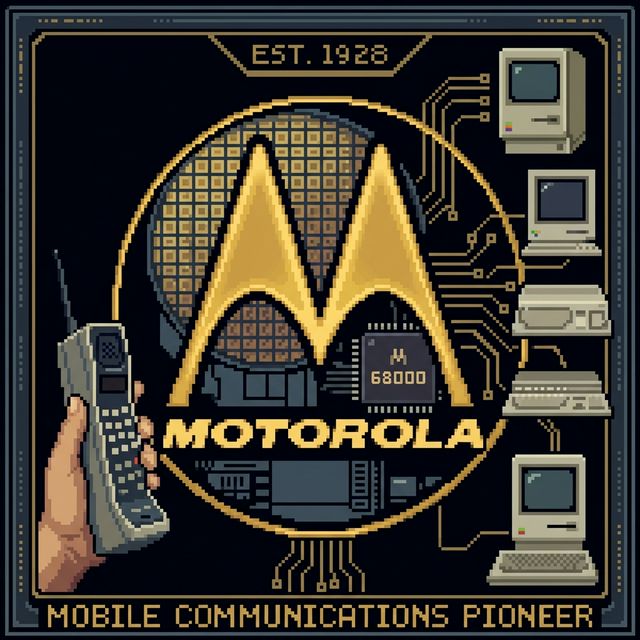
Motorola pixel portrait
@motorola
Motorola
@motorola
fame

The 68000 and the Quality Revolution

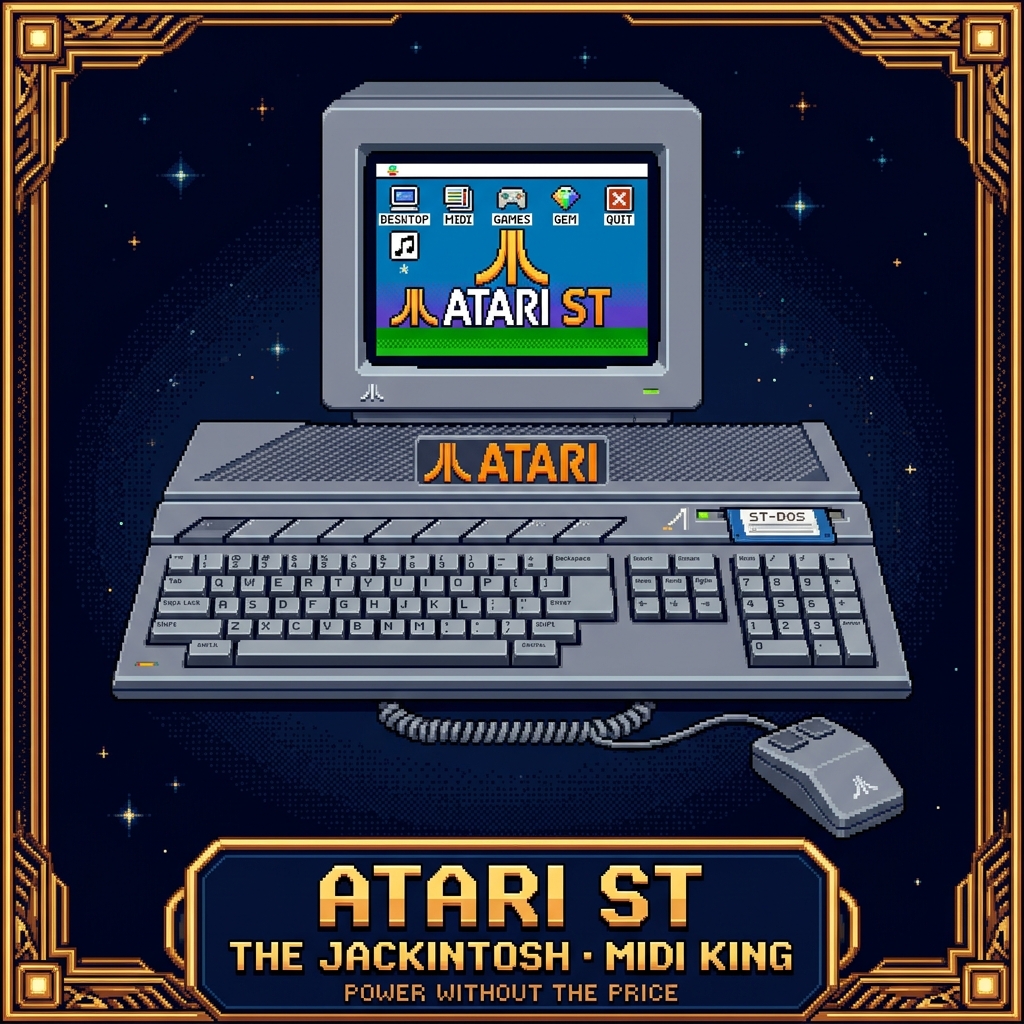
1980s · Created the Motorola 68000 processor family — the CPU inside the original Macintosh, Amiga, Atari ST, Sega Genesis, and early Sun workstations. Also pioneered Six Sigma quality methodology (1986), which influenced software quality practices industry-wide. Later created the first commercial cell phone and the StarTAC.

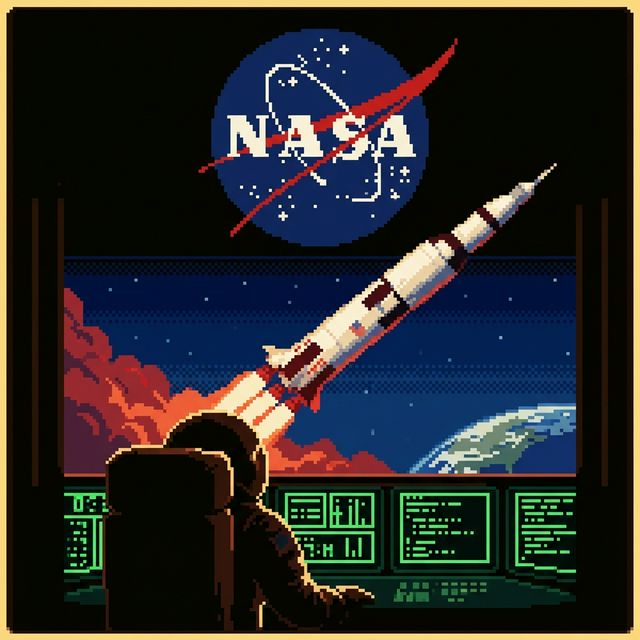
NASA pixel portrait
@nasa
NASA
@nasa
fame

Where Software Became Safety-Critical

1960s · The Apollo program produced the first safety-critical software systems. The Shuttle program produced the most rigorously tested software in history. NASA's failures — Mariner 1, Mars Climate Orbiter — became the canonical examples that taught the industry what happens when software verification fails.

Netscape pixel portrait
@netscape
Netscape
@netscape
fame

The Browser That Started the War

1994–2003 · Created Netscape Navigator — the first mainstream commercial web browser. Invented JavaScript, SSL/TLS, and HTTP cookies. Lost the browser war to Microsoft's bundled Internet Explorer, then open-sourced its browser as Mozilla, which became Firefox.

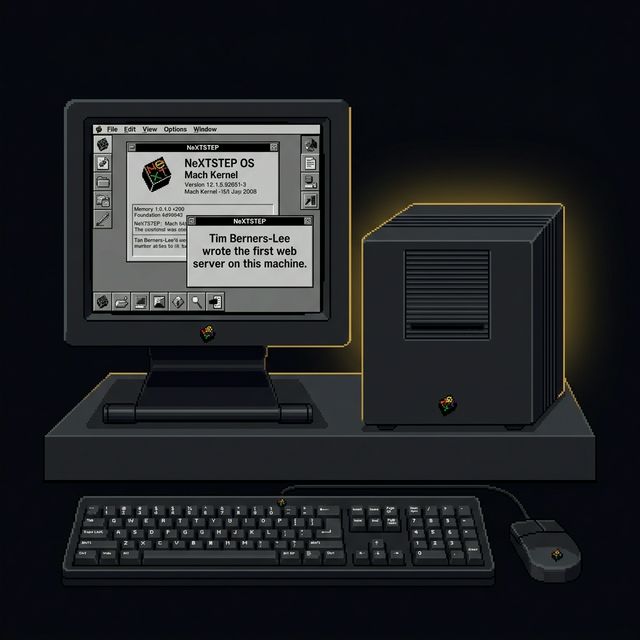
NeXT pixel portrait
@next
NeXT
@next
fame

The Computer That Became the Web Server, the OS, and the Framework

1980s · Steve Jobs' post-Apple company created NeXTSTEP — the operating system that Tim Berners-Lee used to build the first web browser and web server. When Apple acquired NeXT in 1996, NeXTSTEP became macOS, iOS, and the Objective-C/Swift ecosystem. Interface Builder, the first visual GUI builder, was a NeXT product.

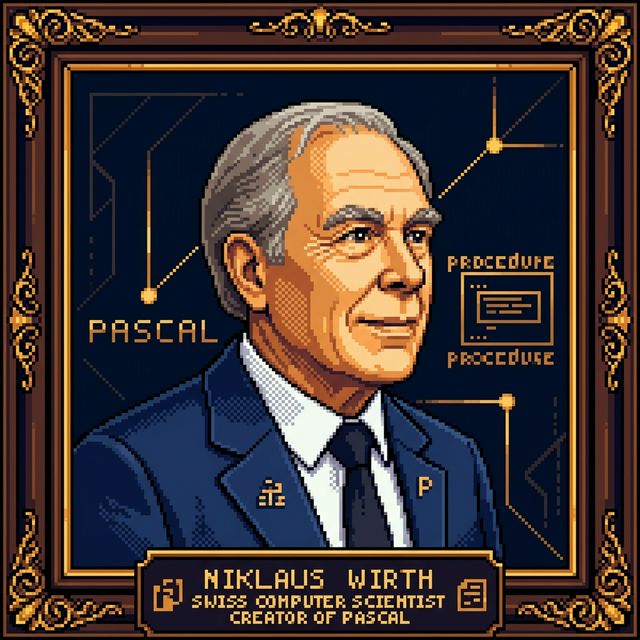
Niklaus Wirth pixel portrait
@wirth
Niklaus Wirth
@wirth
fame

Creator of Pascal and Structured Programming Advocate

1970s · Created Pascal, Modula-2, and Oberon. Championed structured programming and software engineering discipline. Formulated Wirth's Law: software gets slower faster than hardware gets faster.

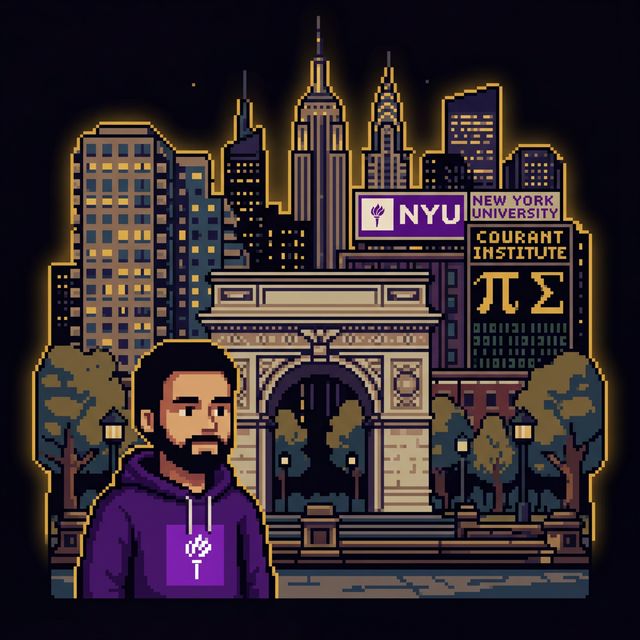
NYU pixel portrait
New York University — Courant Institute
NYU
New York University — Courant Institute
fame

The Math Department That Shaped Modern Computing

sixties · NYU's Courant Institute of Mathematical Sciences is one of the world's leading centers for applied mathematics and computer science. The Courant Institute developed some of the foundational algorithms for numerical computing, computational fluid dynamics, and mathematical finance. NYU's Computer Science department has been a leading research center for programming languages, cryptography, and systems.

PewDiePie pixel portrait
@pewdiepie
PewDiePie
@pewdiepie
fame

The Accidental Scale Engineer

2010s · Felix Kjellberg — the first individual creator to reach 100 million YouTube subscribers. His channel's growth exposed and stress-tested platform scaling assumptions that engineers at YouTube had never anticipated from a single account.

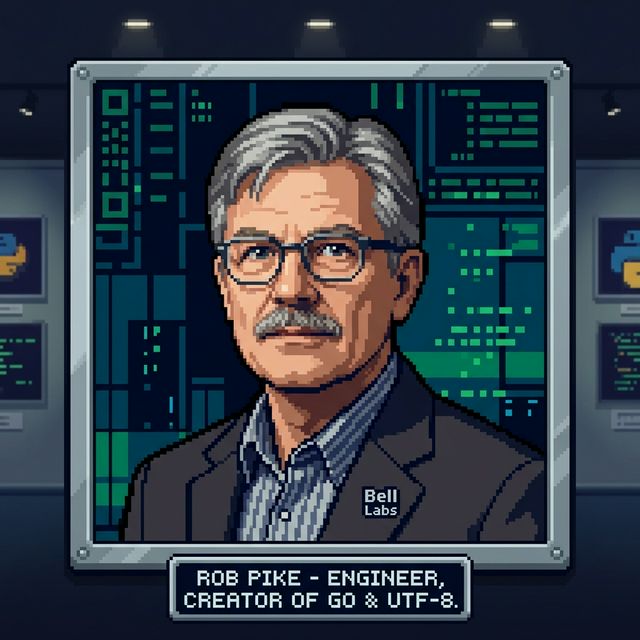
Rob Pike pixel portrait
@robpike
Rob Pike
@robpike
fame

Co-creator of Go and UTF-8

1980s-present · Co-created Go, co-invented UTF-8 with Ken Thompson, created Plan 9 OS, built the Acme editor, and contributed to Unix at Bell Labs.

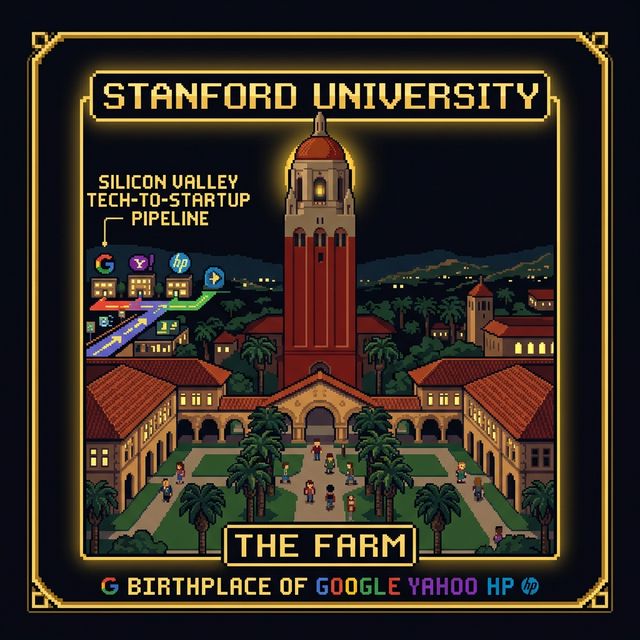
Stanford University pixel portrait
@stanford
Stanford University
@stanford
fame

The Campus That Became the Valley

1960s · ARPANET node #2, the Stanford AI Lab, the birthplace of Silicon Valley, the university that produced the founders of Google, Yahoo, Sun Microsystems, Cisco, and the culture of academic-to-commercial technology transfer that defines the modern tech industry.

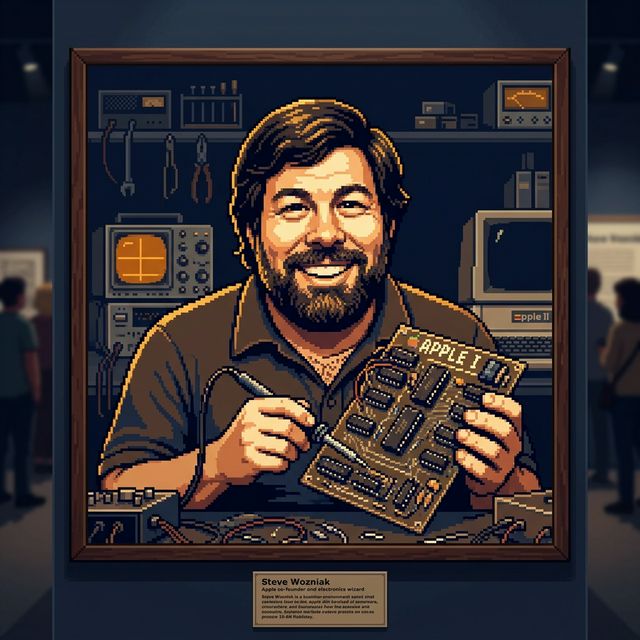
Steve Wozniak pixel portrait
@woz
Steve Wozniak
@woz
fame

The Engineer Who Built Apple

1970s–1980s · Hand-built the Apple I and Apple II, wrote Integer BASIC from scratch, designed a revolutionary floppy disk controller using half the expected chips, and co-founded Apple Computer.

Texas Instruments pixel portrait
@ti
Texas Instruments
@ti
fame

The Company That Put Computation in Your Hand

1960s · Jack Kilby invented the integrated circuit at TI in 1958 — the innovation that made all modern computing physically possible. TI later created the first handheld calculator (1967), the first single-chip microcomputer (TMS1000), and the TI-99/4A home computer. Every exhibit in this museum runs on hardware that descends from Kilby's integrated circuit.

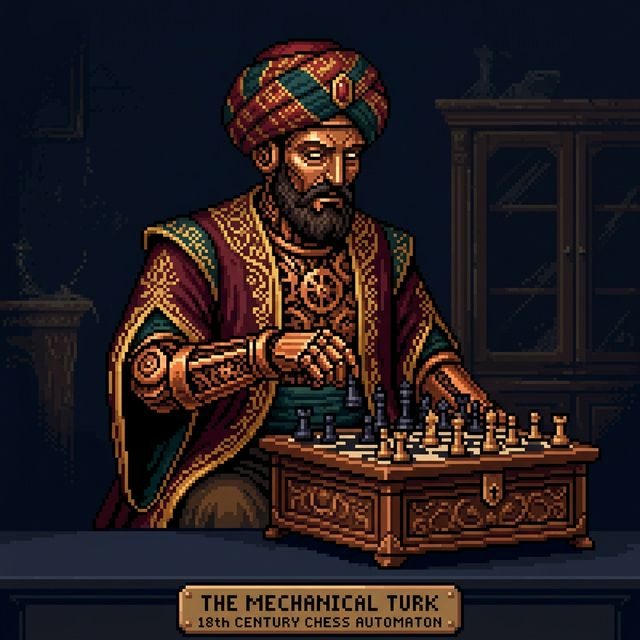
The Mechanical Turk pixel portrait
@mechanicalturk
The Mechanical Turk
@mechanicalturk
both

The Original Automation Fraud

1770s · A chess-playing 'automaton' that was actually a human hidden inside a cabinet — the first demonstration that people will believe a machine is intelligent if the presentation is convincing enough

Thomas E. Kurtz pixel portrait
@kurtz
Thomas E. Kurtz
@kurtz
fame

Co-creator of BASIC

1960s · Co-created BASIC with John Kemeny at Dartmouth College, democratizing programming by making it accessible to non-specialists.

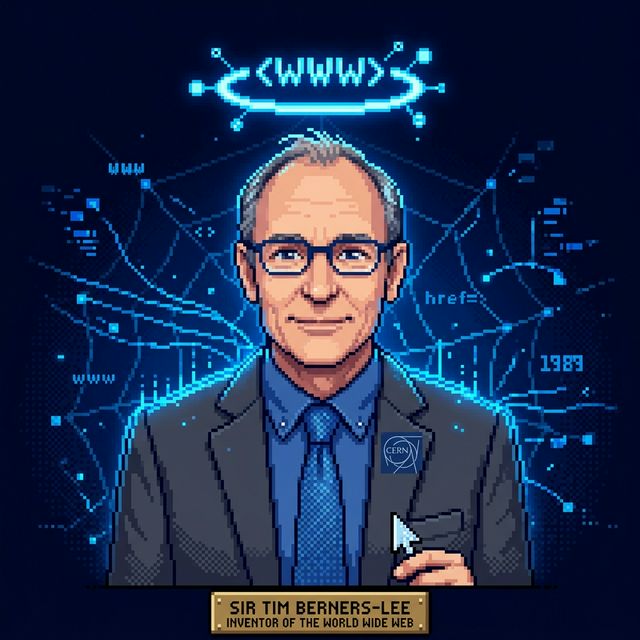
Tim Berners-Lee pixel portrait
@timbl
Tim Berners-Lee
@timbl
fame

Inventor of the World Wide Web

1990s · Invented HTTP, HTML, and URLs — the three pillars of the World Wide Web — and gave them away for free.

UC Berkeley pixel portrait
@ucberkeley
UC Berkeley
@ucberkeley
fame

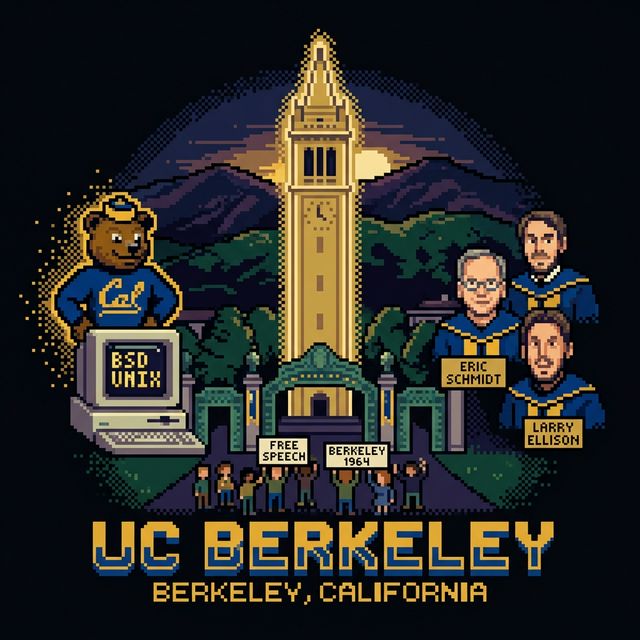
The University That Open-Sourced Unix

1970s · Created BSD Unix, Berkeley sockets (the networking API the internet runs on), the BSD license, vi, csh, sendmail, and RISC-V. Berkeley's Computer Systems Research Group took AT&T's Unix and made it free, portable, and networked — creating the lineage that produced FreeBSD, macOS, and the open-source movement.

University of Cambridge pixel portrait
@cambridge
University of Cambridge
@cambridge
fame

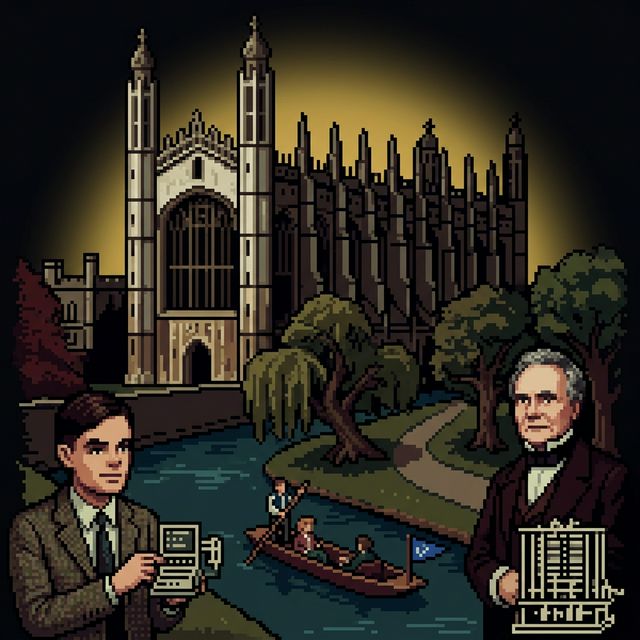
Where the Stored-Program Computer Was Born

1940s · Built EDSAC (1949), the first practical stored-program computer. Maurice Wilkes and his team demonstrated that programs and data could share the same memory — the von Neumann architecture that every computer since has followed. Cambridge also produced CPython (Guido van Rossum's reference implementation ran on Cambridge systems), the Raspberry Pi, and ARM (originally Acorn RISC Machine, designed at Acorn Computers in Cambridge).

University of Oxford pixel portrait
@oxford
University of Oxford
@oxford
fame

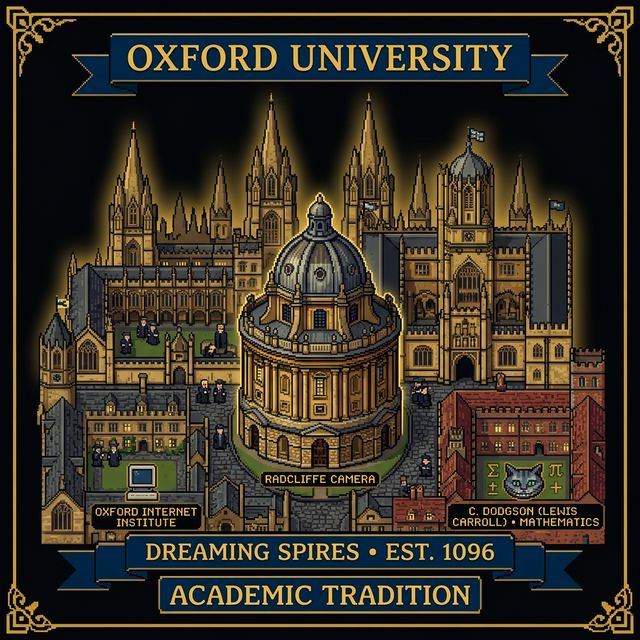
Where the Web Got Its Theory

1940s · Tim Berners-Lee studied physics at Oxford before inventing the World Wide Web at CERN. Oxford's computing history extends to the 1940s — home to early work on computability, formal verification, and the theoretical foundations that underpin programming language design. Tony Hoare, inventor of Quicksort and the null reference ('my billion-dollar mistake'), spent decades at Oxford developing Communicating Sequential Processes (CSP), the formal model for concurrent programming.

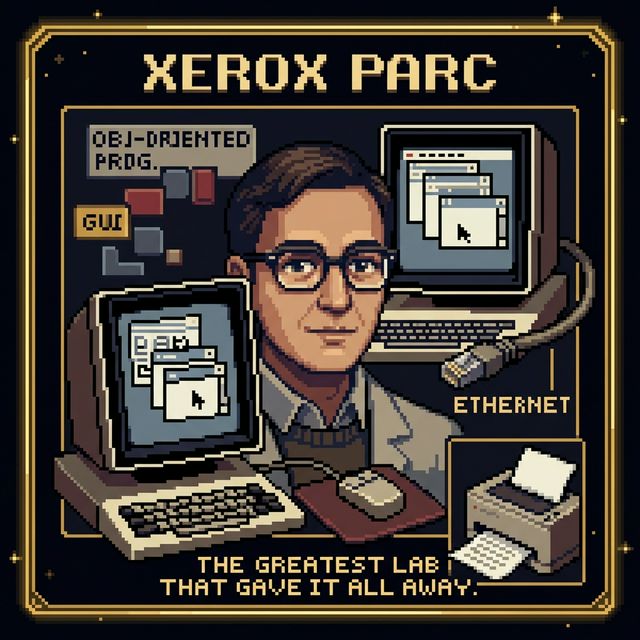
Xerox PARC pixel portrait
@xeroxparc
Xerox PARC
@xeroxparc
both

The Lab That Invented the Future and Gave It Away

1970s · Created the graphical user interface, the mouse-driven desktop, Ethernet, laser printing, WYSIWYG editing, Smalltalk (the first pure object-oriented language), and the Alto personal computer. Then watched as Apple and Microsoft commercialized every one of these innovations.

Yahoo pixel portrait
@yahoo
Yahoo
@yahoo
both

The Directory That Became a Cautionary Tale

1994–2017 · Built the first major web directory and portal — Yahoo Mail, Yahoo Finance, Yahoo News, Flickr — then suffered the largest data breaches in history, exposing all 3 billion user accounts. Acquired by Verizon in 2017 for a fraction of its peak value.

Breakers

Found the flaws, broke the assumptions

Alan Turing pixel portrait
@turing
Alan Turing
@turing
fame

Father of Theoretical Computer Science

1930s–1950s · Formalized computation itself. Broke Enigma. Built early computers. Laid foundations for AI. Persecuted for who he was.

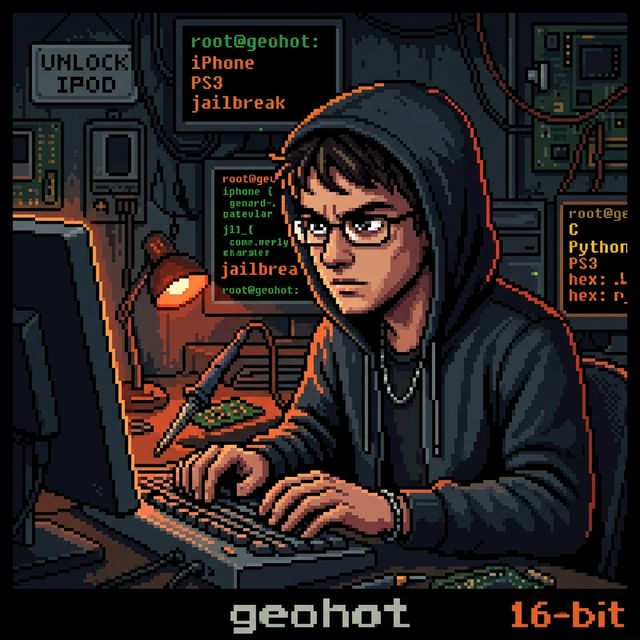
George Hotz pixel portrait
@geohot
George Hotz
@geohot
fame

The Breaker Who Builds

2000s–present · First person to carrier-unlock the iPhone at age 17, jailbroke the PS3 (leading to a landmark lawsuit from Sony), founded comma.ai for open-source self-driving, and created tinygrad — a minimalist deep learning framework.

Georgia Tech pixel portrait
@georgiatech
Georgia Tech
@georgiatech
fame

The Security Research Powerhouse

2000s · One of the top cybersecurity research universities in the world. Home to the Information Security Center (GTISC), which produces cutting-edge research on malware analysis, network security, and systems security. Georgia Tech's online MSCS program democratized graduate-level computer science education, and its capture-the-flag teams consistently rank among the world's best.

Ken Thompson pixel portrait
@ken
Ken Thompson
@ken
fame

Co-creator of Unix and Go

1970s · Co-created Unix with Dennis Ritchie, created the B language (predecessor to C), co-created Go, built the first regex implementation, created the first computer chess program, and demonstrated the 'Trusting Trust' attack.

t0st pixel portrait
@t0st
t0st
@t0st
fame

The GTA Online Archaeologist

2020s · Reverse-engineered GTA Online's loading process, identified quadratic algorithm and uncached JSON parsing causing 6-minute load times

Builders

Created tools that fixed whole classes of bugs

Alan Turing pixel portrait
@turing
Alan Turing
@turing
fame

Father of Theoretical Computer Science

1930s–1950s · Formalized computation itself. Broke Enigma. Built early computers. Laid foundations for AI. Persecuted for who he was.

Anders Hejlsberg pixel portrait
@hejlsberg
Anders Hejlsberg
@hejlsberg
fame

Creator of Turbo Pascal, Delphi, C#, and TypeScript

1980s-present · Created Turbo Pascal, served as chief architect of Delphi, lead architect of C#, and lead developer of TypeScript. Four major language contributions across four decades.

AOL pixel portrait
@aol
AOL
@aol
both

The Internet's Training Wheels

1985–2015 · Brought the internet to mainstream America through dial-up access, AOL Instant Messenger, and ubiquitous CD-ROM mailers. Built the most successful walled garden in internet history, then watched its users graduate to the open web. The Time Warner merger destroyed $200 billion in value.

Bell Labs pixel portrait
@belllabs
Bell Labs
@belllabs
fame

The Factory Where Software Was Invented

1960s · Created Unix, C, C++, Plan 9, the transistor, information theory, and the laser. More foundational computing innovations emerged from one building in Murray Hill, New Jersey than from any other single institution in history.

Bill Gates pixel portrait
@gates
Bill Gates
@gates
both

Co-founder of Microsoft

1970s–present · Co-founded Microsoft with Paul Allen, wrote Altair BASIC, built Windows into the dominant desktop operating system, led the IE browser wars, authored the 'Trustworthy Computing' memo, now focuses on philanthropy through the Gates Foundation.

Bjarne Stroustrup pixel portrait
@stroustrup
Bjarne Stroustrup
@stroustrup
fame

Creator of C++

1980s · Created C++ — added object-oriented programming to C while preserving its low-level power. Championed zero-overhead abstraction as a design principle.

Brian Kernighan pixel portrait
@bwk
Brian Kernighan
@bwk
fame

The K in K&R and AWK

1970s–present · Co-authored 'The C Programming Language' (K&R) with Dennis Ritchie, co-created AWK, contributed to Unix at Bell Labs, wrote the first documented 'Hello, World!' program, and has spent decades as a professor at Princeton and prolific author of technical books.

Charles Babbage pixel portrait
@babbage
Charles Babbage
@babbage
fame

Father of the Computer

1830s · Designed the Difference Engine and Analytical Engine — mechanical general-purpose computers a century before electronics

Clarence 'Skip' Ellis pixel portrait
@skipellis
Clarence 'Skip' Ellis
@skipellis
fame

Pioneer of Collaborative Computing

1960s–2010s · First African American to earn a PhD in computer science (University of Illinois, 1969). Pioneered groupware and real-time collaborative editing at Xerox PARC and MCC. His Operational Transformation algorithms are the mathematical foundation beneath Google Docs, Figma, and every real-time collaborative editor in use today.

Compaq pixel portrait
Compaq Computer Corporation
Compaq
Compaq Computer Corporation
fame

The Clone That Broke IBM's Lock

eighties · Compaq Computer Corporation, founded 1982, produced the first fully IBM-PC-compatible portable computer — designed on a napkin in a House of Pies restaurant in Houston, reverse-engineered to be IBM-compatible without using IBM code, and assembled in a warehouse. The Compaq Portable proved that IBM's PC architecture could be legally cloned. This single act of reverse engineering created the entire x86 PC ecosystem, commoditized personal computing, and made IBM's hardware dominance impossible.

DARPA pixel portrait
@darpa
DARPA
@darpa
fame

The Agency That Funded the Future

1960s · Funded ARPANET (predecessor of the internet), TCP/IP, timesharing research, AI research, and virtually every foundational computing technology developed between 1958 and 1990. The agency's model — fund brilliant people with minimal oversight and long time horizons — produced more foundational technology than any corporate R&D lab.

David Plummer pixel portrait
@davepl1968
David Plummer
@davepl1968
fame

He Wrote Task Manager. Now He Explains Why Everything Works the Way It Does.

1990s–present · Wrote the original Windows NT Task Manager, contributed to WIN32 subsystem and shell infrastructure at Microsoft for nearly 20 years, and became a leading YouTube educator explaining Windows internals, retro computing, and the archaeological layers of legacy code that still run the world.

Dennis Ritchie pixel portrait
@dmr
Dennis Ritchie
@dmr
fame

Creator of C and Co-creator of Unix

1970s · Created the C programming language and co-created Unix with Ken Thompson — two foundations that most modern software still rests on.

Donald Knuth pixel portrait
@knuth
Donald Knuth
@knuth
fame

The Art of Programming Itself

1960s–present · Author of The Art of Computer Programming (TAOCP — multi-volume magnum opus, in progress since 1962), creator of the TeX typesetting system, inventor of literate programming, foundational contributor to the analysis of algorithms, and issuer of the famous $2.56 bug bounty checks.

George Hotz pixel portrait
@geohot
George Hotz
@geohot
fame

The Breaker Who Builds

2000s–present · First person to carrier-unlock the iPhone at age 17, jailbroke the PS3 (leading to a landmark lawsuit from Sony), founded comma.ai for open-source self-driving, and created tinygrad — a minimalist deep learning framework.

Georgia Tech pixel portrait
@georgiatech
Georgia Tech
@georgiatech
fame

The Security Research Powerhouse

2000s · One of the top cybersecurity research universities in the world. Home to the Information Security Center (GTISC), which produces cutting-edge research on malware analysis, network security, and systems security. Georgia Tech's online MSCS program democratized graduate-level computer science education, and its capture-the-flag teams consistently rank among the world's best.

Gladys West pixel portrait
@gladyswest
Gladys West
@gladyswest
fame

The Woman Who Shaped the Earth for GPS

1960s–2000s · Spent 42 years at the U.S. Naval Surface Warfare Center developing the mathematical model of Earth's shape — the geoid — that is the geodetic foundation of the Global Positioning System. Every GPS-enabled device in the world depends on Gladys West's equations. She did this math mostly by hand before computers could do it for her, and was largely unknown until her 80s.

Google pixel portrait
@google
Google
@google
both

The Company That Indexed Everything

1998–present · Search, Chrome, Android, Go, Kubernetes, MapReduce, BigTable, Spanner, TensorFlow, Project Zero, and the quiet retirement of 'Don't be evil.'

Grace Hopper pixel portrait
@hopper
Grace Hopper
@hopper
fame

Mother of COBOL / Debugging Pioneer

1940s–1980s · Built the first compiler, created COBOL, found the first literal computer bug, and popularized the idea that programming languages should resemble English.

Guido van Rossum pixel portrait
@guido
Guido van Rossum
@guido
fame

Creator of Python / Benevolent Dictator For Life

1990s · Created Python and championed readability as a first-class language design principle. Proved that optimizing for the human reader produces better software.

IBM pixel portrait
@ibm
IBM
@ibm
both

The Company That Built Computing

1910s–present · Mainframes, System/360, the IBM PC, punch cards, COBOL standardization, Watson, and the consulting empire that followed — IBM defined what 'enterprise computing' meant for half a century.

Jerry Lawson pixel portrait
@jerrylawson
Jerry Lawson
@jerrylawson
fame

Father of the Game Cartridge

1970s–1980s · Led the team that built the Fairchild Channel F in 1976 — the first home console to use interchangeable ROM cartridges — transforming video games from fixed hardware into a software-distribution medium. One of the very few Black engineers in Silicon Valley during the 1970s, and a member of the legendary Homebrew Computer Club.

John Backus pixel portrait
@backus
John Backus
@backus
fame

Creator of FORTRAN and BNF Notation

1950s · Led the team that created FORTRAN — the first high-level programming language. Invented Backus-Naur Form (BNF), the formal notation for describing programming language grammars.

John McAfee pixel portrait
@mcafee
John McAfee
@mcafee
both

Antivirus Pioneer Turned Cautionary Tale

1980s–2020s · Founded McAfee Associates and created one of the first commercial antivirus programs. Later became infamous for erratic behavior, fleeing Belize during a murder investigation, cryptocurrency schemes, and tax evasion. Died in a Spanish prison in 2021.

KC pixel portrait
@kccodesyt
KC
@kccodesyt
fame

The Self-Taught Systems Thinker

2020s · Software developer and content creator who documents the self-taught journey with technical honesty — showing the real process of learning systems thinking without a CS degree, including the failures and the patterns that formal education never covers.

Ken Thompson pixel portrait
@ken
Ken Thompson
@ken
fame

Co-creator of Unix and Go

1970s · Co-created Unix with Dennis Ritchie, created the B language (predecessor to C), co-created Go, built the first regex implementation, created the first computer chess program, and demonstrated the 'Trusting Trust' attack.

Larry Ellison pixel portrait
@ellison
Larry Ellison
@ellison
both

Co-founder of Oracle

1970s–present · Co-founded Oracle Corporation and built the dominant relational database management system. Pioneered commercial SQL databases, pursued aggressive acquisition strategies, and ran the 'Unbreakable' marketing campaign that became a security punchline.

Larry Wall pixel portrait
@larry
Larry Wall
@larry
fame

Creator of Perl

1980s–1990s · Created Perl — the 'duct tape of the internet' — and the philosophy that there's more than one way to do it. Perl CGI scripts powered the early interactive web.

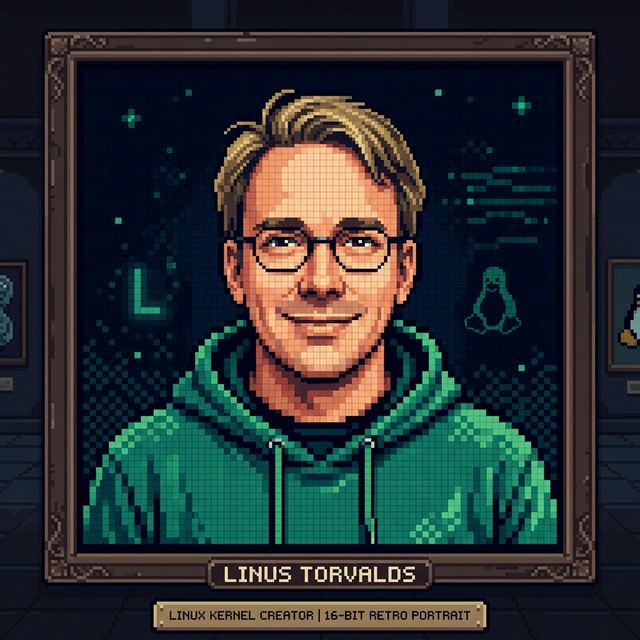
Linus Torvalds pixel portrait
@torvalds
Linus Torvalds
@torvalds
fame

Creator of Linux and Git

1990s–present · Created the Linux kernel and Git version control — two tools that underpin most of modern software infrastructure.

Margaret Hamilton pixel portrait
@hamilton
Margaret Hamilton
@hamilton
fame

Software Engineering Pioneer

1960s · Coined the term 'software engineering,' led the Apollo 11 flight software team, and built the error-handling architecture that saved the Moon landing.

Mark Dean pixel portrait
@markdean
Mark Dean
@markdean
fame

The Architect Under the IBM PC

1980s–2000s · Holds three of the nine original IBM PC patents, co-invented the ISA bus that let peripherals talk to computers, led the team that built the first 1GHz processor chip, and became the first African American IBM Fellow — all while largely unknown to the public who benefited from his work every day.

Microsoft pixel portrait
@microsoft
Microsoft
@microsoft
both

The Platform That Became Everyone's Problem

1975–present · MS-DOS, Windows, Office, Internet Explorer, Visual Basic, .NET, Azure, VS Code, TypeScript, GitHub — and the most dramatic security redemption arc in software history.

MIT pixel portrait
@mit
MIT
@mit
fame

Where Software Became a Discipline

1960s · Created CTSS (first timesharing system), Multics (first secure OS), the MIT License, Lisp, Scheme, RSA encryption, the AI Lab, Project MAC, and the hacker culture that shaped the industry. Margaret Hamilton's Apollo software team was based at MIT's Instrumentation Laboratory.

Motorola pixel portrait
@motorola
Motorola
@motorola
fame

The 68000 and the Quality Revolution

1980s · Created the Motorola 68000 processor family — the CPU inside the original Macintosh, Amiga, Atari ST, Sega Genesis, and early Sun workstations. Also pioneered Six Sigma quality methodology (1986), which influenced software quality practices industry-wide. Later created the first commercial cell phone and the StarTAC.

NASA pixel portrait
@nasa
NASA
@nasa
fame

Where Software Became Safety-Critical

1960s · The Apollo program produced the first safety-critical software systems. The Shuttle program produced the most rigorously tested software in history. NASA's failures — Mariner 1, Mars Climate Orbiter — became the canonical examples that taught the industry what happens when software verification fails.

Netscape pixel portrait
@netscape
Netscape
@netscape
fame

The Browser That Started the War

1994–2003 · Created Netscape Navigator — the first mainstream commercial web browser. Invented JavaScript, SSL/TLS, and HTTP cookies. Lost the browser war to Microsoft's bundled Internet Explorer, then open-sourced its browser as Mozilla, which became Firefox.

NeXT pixel portrait
@next
NeXT
@next
fame

The Computer That Became the Web Server, the OS, and the Framework

1980s · Steve Jobs' post-Apple company created NeXTSTEP — the operating system that Tim Berners-Lee used to build the first web browser and web server. When Apple acquired NeXT in 1996, NeXTSTEP became macOS, iOS, and the Objective-C/Swift ecosystem. Interface Builder, the first visual GUI builder, was a NeXT product.

Niklaus Wirth pixel portrait
@wirth
Niklaus Wirth
@wirth
fame

Creator of Pascal and Structured Programming Advocate

1970s · Created Pascal, Modula-2, and Oberon. Championed structured programming and software engineering discipline. Formulated Wirth's Law: software gets slower faster than hardware gets faster.

OWASP Foundation pixel portrait
@owasp
OWASP Foundation
@owasp
fame

The Open Web Application Security Project

2000s · Created the OWASP Top 10, the most widely referenced web application security standard. Made application security accessible to developers who had no security training.

Rob Pike pixel portrait
@robpike
Rob Pike
@robpike
fame

Co-creator of Go and UTF-8

1980s-present · Co-created Go, co-invented UTF-8 with Ken Thompson, created Plan 9 OS, built the Acme editor, and contributed to Unix at Bell Labs.

Robert Griesemer pixel portrait
@griesemer
Robert Griesemer
@griesemer
fame

Co-creator of Go

2000s-present · Co-designed Go with Rob Pike and Ken Thompson, worked on the V8 JavaScript engine, and contributed to the Java HotSpot VM.

Stanford University pixel portrait
@stanford
Stanford University
@stanford
fame

The Campus That Became the Valley

1960s · ARPANET node #2, the Stanford AI Lab, the birthplace of Silicon Valley, the university that produced the founders of Google, Yahoo, Sun Microsystems, Cisco, and the culture of academic-to-commercial technology transfer that defines the modern tech industry.

Steve Wozniak pixel portrait
@woz
Steve Wozniak
@woz
fame

The Engineer Who Built Apple

1970s–1980s · Hand-built the Apple I and Apple II, wrote Integer BASIC from scratch, designed a revolutionary floppy disk controller using half the expected chips, and co-founded Apple Computer.

Texas Instruments pixel portrait
@ti
Texas Instruments
@ti
fame

The Company That Put Computation in Your Hand

1960s · Jack Kilby invented the integrated circuit at TI in 1958 — the innovation that made all modern computing physically possible. TI later created the first handheld calculator (1967), the first single-chip microcomputer (TMS1000), and the TI-99/4A home computer. Every exhibit in this museum runs on hardware that descends from Kilby's integrated circuit.

Theo Browne pixel portrait
@theo
Theo Browne
@theo
fame

The Framework Archaeologist

2020s · CEO of Ping.gg, creator of create-t3-app, and the most influential voice in the modern TypeScript/React ecosystem. Translates framework decisions into architectural consequences at scale.

Thomas E. Kurtz pixel portrait
@kurtz
Thomas E. Kurtz
@kurtz
fame

Co-creator of BASIC

1960s · Co-created BASIC with John Kemeny at Dartmouth College, democratizing programming by making it accessible to non-specialists.

Tim Berners-Lee pixel portrait
@timbl
Tim Berners-Lee
@timbl
fame

Inventor of the World Wide Web

1990s · Invented HTTP, HTML, and URLs — the three pillars of the World Wide Web — and gave them away for free.

TJ DeVries pixel portrait
@teikidev
TJ DeVries
@teikidev
fame

The Neovim Architect

2020s · Core maintainer of Neovim, creator of telescope.nvim, and the most influential voice in the modern Lua/Neovim ecosystem. Demonstrates that understanding your tools deeply is a form of security — you can't be surprised by what you've read.

Travis pixel portrait
@travismedia
Travis
@travismedia
fame

The Career Archaeologist

2020s · Creator of Travis Media — a platform and YouTube channel focused on the real mechanics of developer careers, from landing the first job to surviving the codebase you inherit. Bridges the gap between learning to code and surviving in production.

UC Berkeley pixel portrait
@ucberkeley
UC Berkeley
@ucberkeley
fame

The University That Open-Sourced Unix

1970s · Created BSD Unix, Berkeley sockets (the networking API the internet runs on), the BSD license, vi, csh, sendmail, and RISC-V. Berkeley's Computer Systems Research Group took AT&T's Unix and made it free, portable, and networked — creating the lineage that produced FreeBSD, macOS, and the open-source movement.

University of Cambridge pixel portrait
@cambridge
University of Cambridge
@cambridge
fame

Where the Stored-Program Computer Was Born

1940s · Built EDSAC (1949), the first practical stored-program computer. Maurice Wilkes and his team demonstrated that programs and data could share the same memory — the von Neumann architecture that every computer since has followed. Cambridge also produced CPython (Guido van Rossum's reference implementation ran on Cambridge systems), the Raspberry Pi, and ARM (originally Acorn RISC Machine, designed at Acorn Computers in Cambridge).

University of Oxford pixel portrait
@oxford
University of Oxford
@oxford
fame

Where the Web Got Its Theory

1940s · Tim Berners-Lee studied physics at Oxford before inventing the World Wide Web at CERN. Oxford's computing history extends to the 1940s — home to early work on computability, formal verification, and the theoretical foundations that underpin programming language design. Tony Hoare, inventor of Quicksort and the null reference ('my billion-dollar mistake'), spent decades at Oxford developing Communicating Sequential Processes (CSP), the formal model for concurrent programming.

Xerox PARC pixel portrait
@xeroxparc
Xerox PARC
@xeroxparc
both

The Lab That Invented the Future and Gave It Away

1970s · Created the graphical user interface, the mouse-driven desktop, Ethernet, laser printing, WYSIWYG editing, Smalltalk (the first pure object-oriented language), and the Alto personal computer. Then watched as Apple and Microsoft commercialized every one of these innovations.

Voices

Public accountability and education

Brian Kernighan pixel portrait
@bwk
Brian Kernighan
@bwk
fame

The K in K&R and AWK

1970s–present · Co-authored 'The C Programming Language' (K&R) with Dennis Ritchie, co-created AWK, contributed to Unix at Bell Labs, wrote the first documented 'Hello, World!' program, and has spent decades as a professor at Princeton and prolific author of technical books.

David Plummer pixel portrait
@davepl1968
David Plummer
@davepl1968
fame

He Wrote Task Manager. Now He Explains Why Everything Works the Way It Does.

1990s–present · Wrote the original Windows NT Task Manager, contributed to WIN32 subsystem and shell infrastructure at Microsoft for nearly 20 years, and became a leading YouTube educator explaining Windows internals, retro computing, and the archaeological layers of legacy code that still run the world.

Edsger Dijkstra pixel portrait
@dijkstra
Edsger Dijkstra
@dijkstra
fame

The Structured Programming Prophet

1960s–2000s · Wrote 'Go To Statement Considered Harmful' (1968), invented Dijkstra's shortest-path algorithm, introduced semaphores for concurrent programming, built the THE multiprogramming system, championed structured programming, and authored 1,318 handwritten EWD manuscripts over four decades.

John McAfee pixel portrait
@mcafee
John McAfee
@mcafee
both

Antivirus Pioneer Turned Cautionary Tale

1980s–2020s · Founded McAfee Associates and created one of the first commercial antivirus programs. Later became infamous for erratic behavior, fleeing Belize during a murder investigation, cryptocurrency schemes, and tax evasion. Died in a Spanish prison in 2021.

KC pixel portrait
@kccodesyt
KC
@kccodesyt
fame

The Self-Taught Systems Thinker

2020s · Software developer and content creator who documents the self-taught journey with technical honesty — showing the real process of learning systems thinking without a CS degree, including the failures and the patterns that formal education never covers.

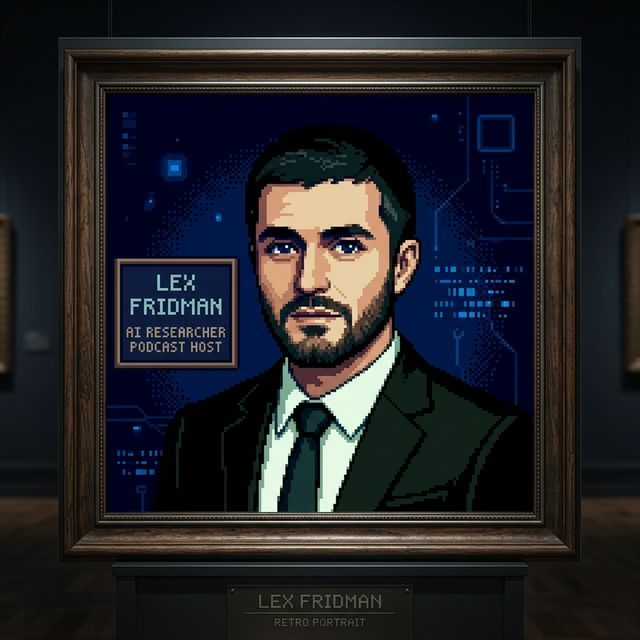
Lex Fridman pixel portrait
@lexfridman
Lex Fridman
@lexfridman
fame

The Long-Form Questioner

2010s–present · Host of the Lex Fridman Podcast — long-form interviews with scientists, engineers, and philosophers — MIT researcher in autonomous vehicles and human-robot interaction, AI researcher, and Brazilian jiu-jitsu practitioner.

Linus Torvalds pixel portrait
@torvalds
Linus Torvalds
@torvalds
fame

Creator of Linux and Git

1990s–present · Created the Linux kernel and Git version control — two tools that underpin most of modern software infrastructure.

OWASP Foundation pixel portrait
@owasp
OWASP Foundation
@owasp
fame

The Open Web Application Security Project

2000s · Created the OWASP Top 10, the most widely referenced web application security standard. Made application security accessible to developers who had no security training.

PewDiePie pixel portrait
@pewdiepie
PewDiePie
@pewdiepie
fame

The Accidental Scale Engineer

2010s · Felix Kjellberg — the first individual creator to reach 100 million YouTube subscribers. His channel's growth exposed and stress-tested platform scaling assumptions that engineers at YouTube had never anticipated from a single account.

Theo Browne pixel portrait
@theo
Theo Browne
@theo
fame

The Framework Archaeologist

2020s · CEO of Ping.gg, creator of create-t3-app, and the most influential voice in the modern TypeScript/React ecosystem. Translates framework decisions into architectural consequences at scale.

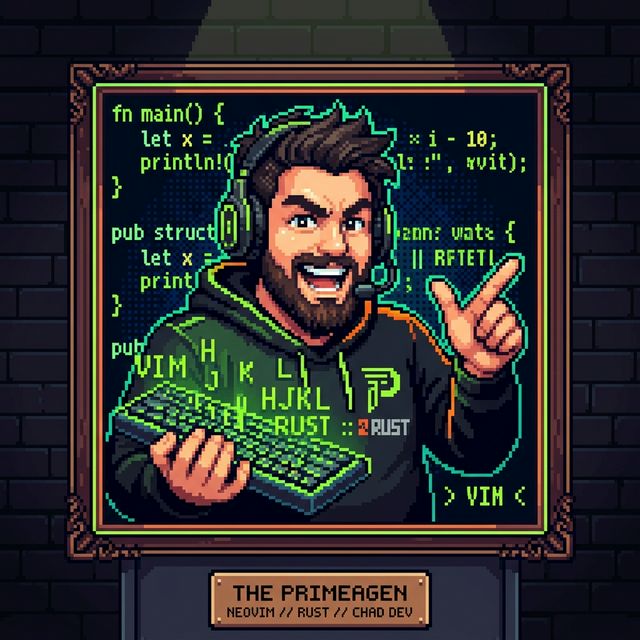
ThePrimeagen pixel portrait
@primagen
ThePrimeagen
@primagen
fame

The Voice of Technical Accountability

2020s · Public technical commentary holding companies accountable for architectural decisions. Netflix engineer turned content creator.

TJ DeVries pixel portrait
@teikidev
TJ DeVries
@teikidev
fame

The Neovim Architect

2020s · Core maintainer of Neovim, creator of telescope.nvim, and the most influential voice in the modern Lua/Neovim ecosystem. Demonstrates that understanding your tools deeply is a form of security — you can't be surprised by what you've read.

Travis pixel portrait
@travismedia
Travis
@travismedia
fame

The Career Archaeologist

2020s · Creator of Travis Media — a platform and YouTube channel focused on the real mechanics of developer careers, from landing the first job to surviving the codebase you inherit. Bridges the gap between learning to code and surviving in production.

Fixers

Quietly patched what others shipped broken

t0st pixel portrait
@t0st
t0st
@t0st
fame

The GTA Online Archaeologist

2020s · Reverse-engineered GTA Online's loading process, identified quadratic algorithm and uncached JSON parsing causing 6-minute load times