“I'm a human being. When I see something that is beyond my understanding, I'm afraid.”
The Machine
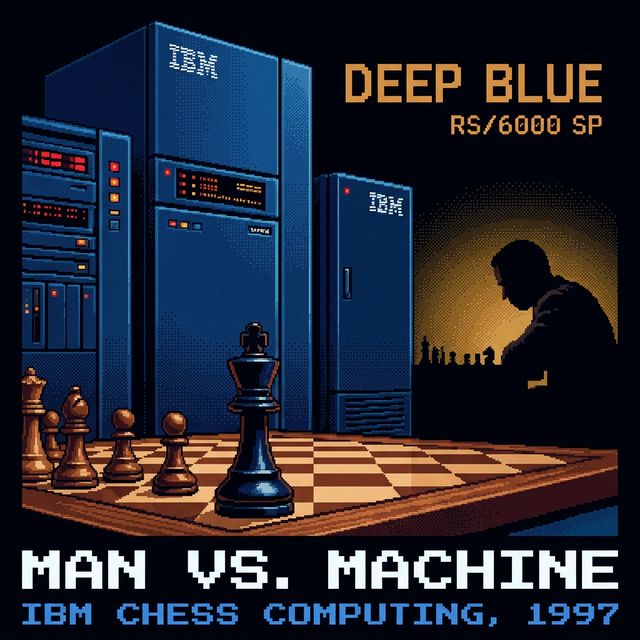
Deep Blue was a parallel computer using 30 IBM RS/6000 processors enhanced with 480 custom VLSI chess chips, capable of evaluating 200 million chess positions per second. Its chess evaluation was a combination of handcrafted evaluation functions — written by chess grandmaster Joel Benjamin, among others — and a search algorithm that examined positions to depths of 6-8 plies in normal play, with selective extensions to 20-40 plies in tactical sequences.
The machine was not learning chess. It was searching chess: examining a tree of possible move sequences and selecting the branch with the best evaluated endpoint. The chess knowledge was in the evaluation function. The brute force was in the search. The custom chips made the search fast enough to beat anyone.
The Match
The 1996 match ended Kasparov 4–2. He won. The rematch in May 1997 — with an upgraded machine renamed Deeper Blue — was different. Kasparov won Game 1. The machine won Game 2 in a fashion that visibly disturbed Kasparov: a move in the final stages that appeared to sacrifice a positional advantage for a subtle long-term gain — the kind of play associated with deep understanding rather than brute-force search. Kasparov suspected the IBM team had violated match rules and consulted human grandmasters between or during games.
Game 2 remains controversial. Analyses conducted afterward suggested the move in question was a search artifact — the program's evaluation function produced a specific numerical result that caused it to prefer an unusual move — rather than evidence of deep understanding. Kasparov's request to see Deep Blue's logs was refused by IBM. The match continued. The machine won 3.5–2.5.
IBM retired Deep Blue immediately after the match. It has never played chess since.
The Exhibit
Deep Blue belongs in the museum for two reasons. The technical achievement is genuine: it was the first computer to defeat the world's strongest chess player, and the engineering behind the evaluation function and search algorithm represents one of the most focused and successful applications of domain-specific hardware in computer science history.
The controversy is the exhibit: a machine won a match, the logs were not disclosed, and we cannot fully explain the move that may have decided the outcome. This is Observer Interference (Law VI) at the machine level — the observer (IBM's post-game analysis) could not be fully independent because IBM had a commercial interest in the result. The specific move that shook Kasparov's confidence remains ambiguous.
Deep Blue beat the world champion. Whether it beat him fairly is undocumented, because the documentation was withheld.
The most powerful chess computer in history defeated the best chess player in human history. Then it was retired. Then the logs were never released. The museum documents what was established and what was not.