“The process of preparing programs for a digital computer is especially attractive, not only because it can be economically and scientifically rewarding, but also because it can be an aesthetic experience much like composing poetry or music.”
The Story
The Massachusetts Institute of Technology has been at the center of computing since the field began. The Whirlwind computer (1951) — built at MIT for the Navy — led directly to SAGE, the first large-scale software project. Project MAC (1963) created CTSS, the first practical timesharing system, which demonstrated that multiple users could share a computer — and also demonstrated that sharing a computer without memory protection was dangerous (the CTSS password file incident of 1966 is documented in this museum).
Multics, the successor to CTSS, was MIT's attempt to build a secure timesharing system from the ground up. It introduced segmented virtual memory, per-segment access controls, and the concept of rings of protection. It was also so complex that Ken Thompson and Dennis Ritchie, frustrated by its ambition, built Unix as a deliberate simplification. MIT's reach for security produced the system that inspired the system that runs the world.
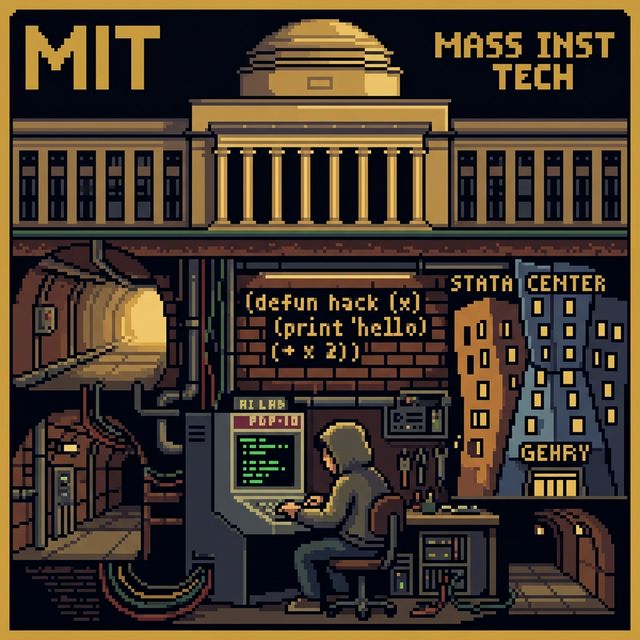
The MIT AI Lab — founded by John McCarthy and Marvin Minsky — created Lisp, the second-oldest high-level programming language still in use. The lab's hacker culture — where "hacker" meant someone who explored systems deeply and creatively — defined the ethos that produced free software, open source, and the belief that understanding your tools is a moral obligation.
Why They're in the Hall
MIT is in the museum because it is the institution where software became a discipline instead of a craft. The CTSS password incident demonstrated that security was an architectural problem, not just a procedural one. Multics proved that building a secure system was possible but expensive. The Apollo Guidance Computer — built by Margaret Hamilton's team at MIT's Instrumentation Laboratory — proved that software could be safety-critical and reliable if error handling was designed in from the beginning. And the AI Lab's hacker culture produced the mindset that this museum embodies: understand the system deeply, or be surprised by it.